Friendship
Your child and the First-Day Friend
Your child and the First-Day Friend
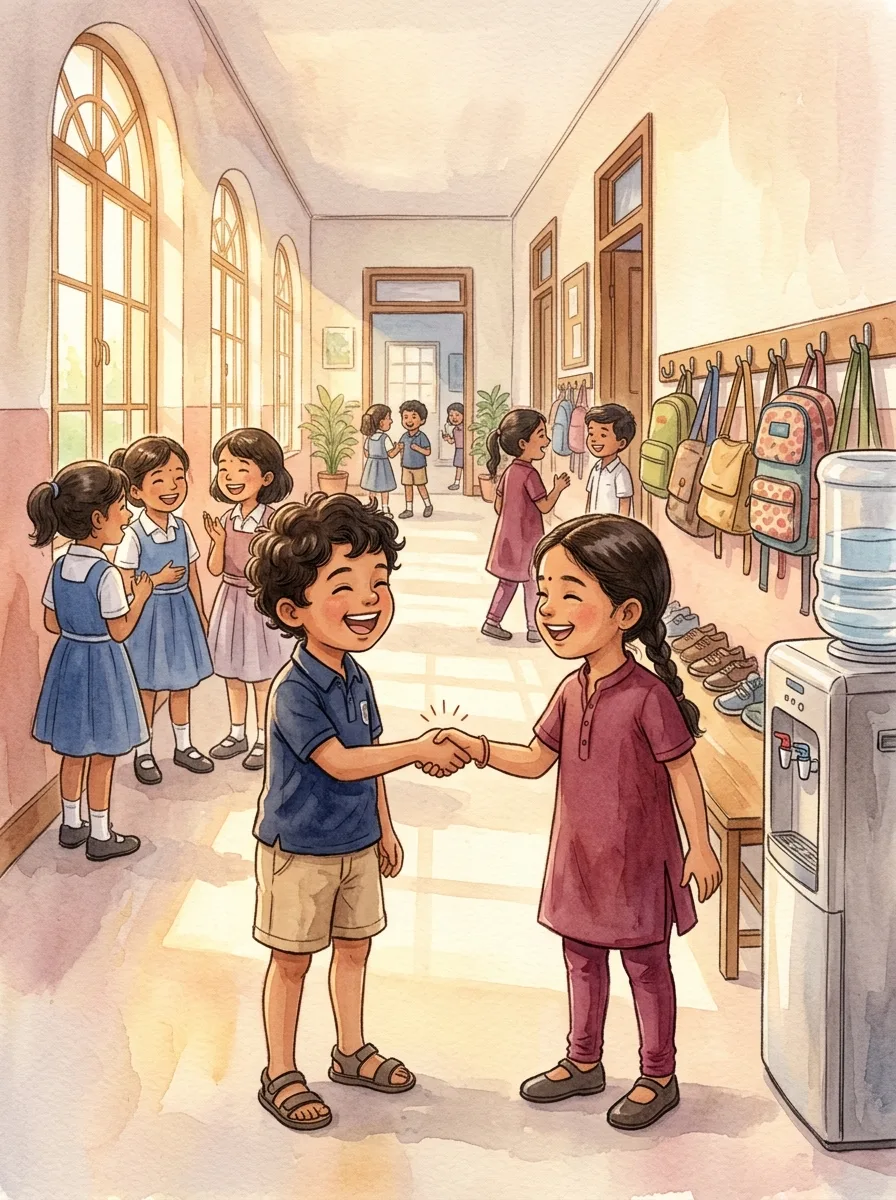
It is Your child's first day at a new school and every group already has a name and a secret handshake. At the water cooler Your child meets Zoya, who has been here a year and still does not have a group either. They make one up on the spot, two members, with a handshake that ends in a hop. By the bell it has four members and a song.
Lesson: A friendship can start with one hello
Friendship
Your child and the Secret That Stayed Secret
Your child and the Secret That Stayed Secret
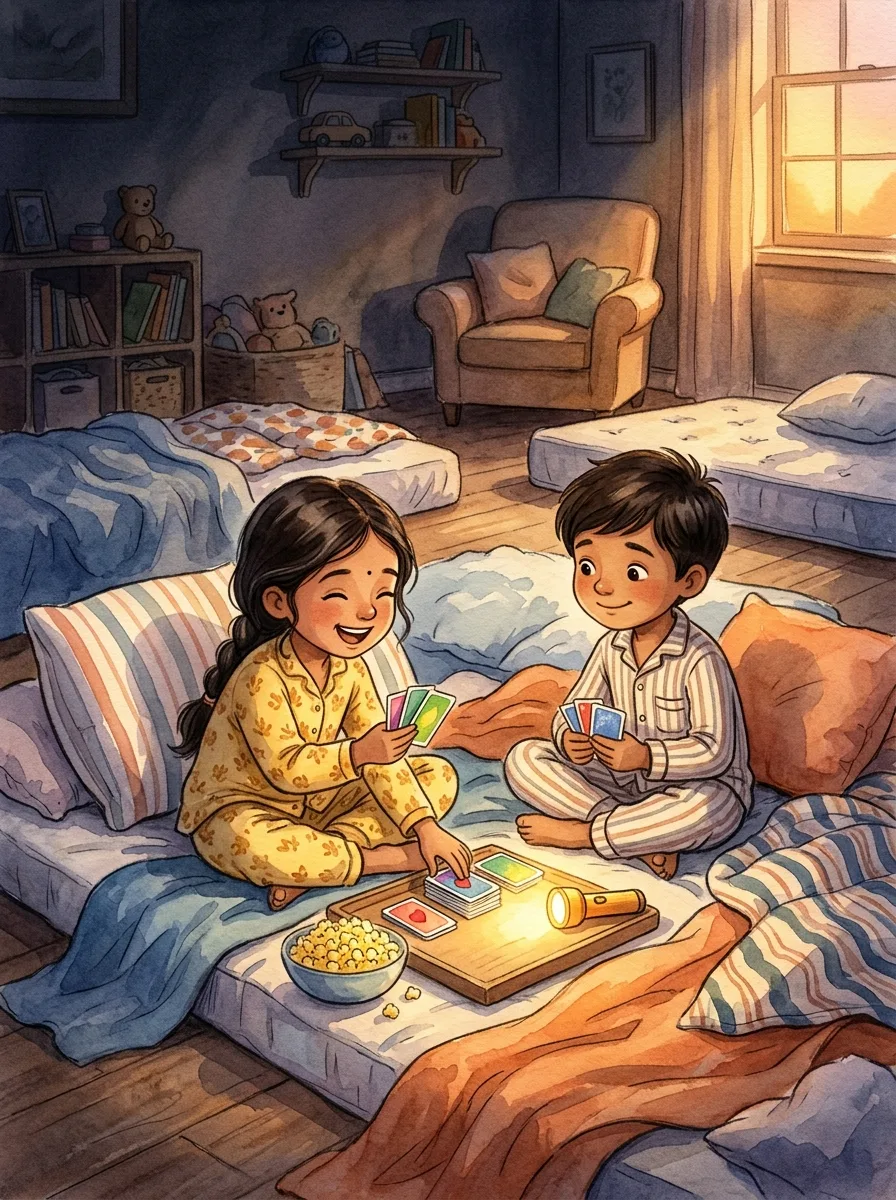
Rohan tells Your child that he is scared of the dark and makes Your child promise not to tell. At the sleepover the other children start daring each other about spooky stories, and Rohan goes quiet. Your child could get a big laugh. Instead Your child says the whole thing sounds boring and suggests a torch-light card game. Rohan does not say anything, but he deals Your child the first hand.
Lesson: A good friend keeps your secrets safe
Friendship
Your child and the Bicycle Bell
Your child and the Bicycle Bell
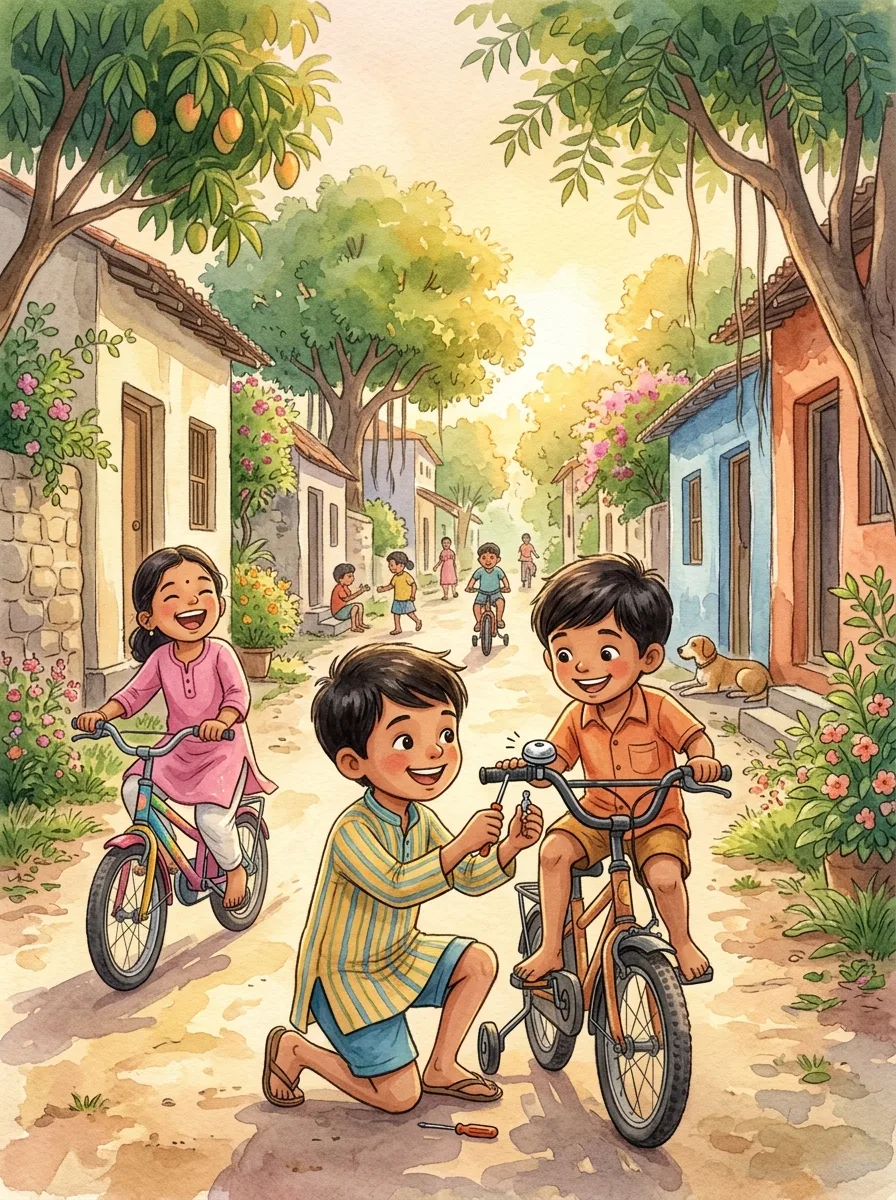
Priya's bicycle bell breaks and the colony boys say she cannot ride with them if she cannot ring. Your child's bicycle has the shiniest bell in the colony. Your child unscrews it, fixes it onto Priya's handlebar, and rides along ringing nothing at all, calling out ting-ting instead. By the next lap, everyone is shouting ting-ting and nobody remembers who has the bell.
Lesson: Real friends share what makes the ride better
Friendship
Your child and the Friend Who Was Not Cool
Your child and the Friend Who Was Not Cool
The popular group invites Your child to sit with them at lunch, on one condition: leave the old friend who wears thick glasses. For a day Your child does. It feels wrong. On the second day, Your child carries the tiffin back to the old bench, and the friend with thick glasses moves over without a word. The popular group laughs. A week later, two of them ask to sit at the old bench too.
Lesson: A friend who asks you to drop a friend is not one
Friendship
Your child and the Fight Over the Cricket Ball
Your child and the Fight Over the Cricket Ball
Your child and best friend Aman have fought over whose ball went over the wall, and have not spoken for three days. Both are miserable. On the fourth day Your child buys a new ball with pocket money, writes both names on it, and leaves it on Aman's doorstep. Aman comes over that evening holding the ball, and neither of them remembers what the old fight was about.
Lesson: The first one to say sorry is the braver friend
Friendship
Your child and the Friend in the Hospital
Your child and the Friend in the Hospital
Your child's best friend has been in hospital for two weeks and the class has moved on. Your child has not. Every day, Your child writes down what happened in school, the jokes, the homework, the new boy, and takes the notebook to the hospital on Sundays. When the friend returns, he knows everything, and walks in as if he had never left. The notebook stays in his bag for years.
Lesson: A real friend keeps your place while you are away
Friendship
Your child and the Friend Who Told a Lie
Your child and the Friend Who Told a Lie
Your child's friend Priya lies to the teacher about a broken beaker and blames another girl. Your child saw what happened. Saying something could end the friendship. Your child talks to Priya alone first, says it was wrong, and offers to go with her to the teacher. Priya is angry, then scared, then goes. The teacher is kind. Priya says later that Your child is the only friend who would have done that.
Lesson: A true friend tells you when you are wrong, and stands beside you when you fix it
Friendship
Your child and the New Friend and the Old
Your child and the New Friend and the Old
A new boy arrives and Your child likes him at once, and the old friend feels left out and sulks. Your child does not want to choose. So Your child invites both to the terrace after school, brings three glasses of nimbu pani, and starts a game that needs exactly three players. By sunset the old friend and the new one are arguing about cricket like brothers, and Your child is refereeing.
Lesson: A new friend does not have to cost an old one
Friendship
Your child and the Friend Who Moved Abroad
Your child and the Friend Who Moved Abroad
Zara has moved to another country and the time difference means she is asleep when Your child is awake. Everyone says the friendship will fade. Your child refuses. Every Saturday at six in the morning, Your child is at the laptop, and Zara at her evening. They play the same card game across the screen, and show each other the weather. Three years later, they are still playing.
Lesson: Friendship survives distance if someone sets the alarm
Friendship
Your child and the Friend Who Always Won
Your child and the Friend Who Always Won
Rohan wins every game, every race, every quiz, and Your child is tired of coming second and thinking of stopping the friendship. Then Rohan loses the school election and sits alone under the stairs, and nobody goes to him because winners do not need comfort. Your child goes. Rohan cries a little. Your child discovers that being second beside a friend is fine, and that first place can be lonely.
Lesson: A friend is for the losing days, not only the winning ones
Friendship
Your child and the Secret Handshake
Your child and the Secret Handshake
Your child and Meera invent a secret handshake with seven moves, and it is theirs alone. Then the shy new girl watches them do it and looks so left out that Your child feels a pinch. Meera says it is secret. Your child says a secret with three people is still a secret. They teach the new girl all seven moves, and add an eighth for her. The handshake is better with three.
Lesson: The best secrets have room for one more
Friendship
Your child and the Friend with the Broken Bicycle
Your child and the Friend with the Broken Bicycle
The Sunday cycle race is tomorrow and Your child's friend Kabir has a flat tyre and no money to fix it. Your child has a perfect bicycle and a good chance of winning. Your child spends the evening at the puncture shop with Kabir, learning to patch a tube, and pays with the pocket money saved for a prize. Kabir comes third. Your child comes fifth, and does not mind at all.
Lesson: A friend's race matters as much as your own
Friendship
Your child and the Friend Who Was Always Late
Your child and the Friend Who Was Always Late
Sameer is late for everything, and Your child is tired of waiting at the gate. Instead of dropping him, Your child asks why. It turns out Sameer walks his little sister to her school first, every morning, across the main road. Your child says nothing about lateness again. Instead, Your child starts walking with them, and the three of them arrive together, five minutes late, every day.
Lesson: Ask why before you judge a friend
Friendship
Your child and the Friend Who Was Jealous
Your child and the Friend Who Was Jealous
Your child wins the drawing prize and the best friend, Tara, who also entered, stops talking. It hurts. Your child could stay proud and wait. Instead, Your child takes the prize drawing to Tara's house and asks her honestly what she thinks could be better. Tara, surprised, points out three things. They draw together the next week, and Tara wins the next prize. Your child claps loudest.
Lesson: Share your win and it stops being a wall between friends
Friendship
Your child and the Promise Under the Neem Tree
Your child and the Promise Under the Neem Tree
On the last day of the school year, Your child and three friends sit under the neem tree and promise to meet there on the first day of every year, no matter what. The summer is long. Some move classes, one moves house. On the first day, Your child goes to the tree, not sure anyone will come. One friend is there. Then two. Then, at the very end of break, the one who moved house.
Lesson: Keep the promise and the friends come back
Friendship
A Day by the Yamuna River
A Day by the Yamuna River
Beside the shining Yamuna river, young Krishna invites Your child and a band of giggling friends to a joyful day of play. They chase butterflies, share ripe fruit, and dance while Krishna's flute fills the air with happy music. When a friend feels left out, Your child gently includes them. Krishna beams, showing Your child that true friendship means sharing joy with everyone.
Lesson: True friendship means including and sharing joy with everyone.
An acorn-sealed invitation from the Forest Council arrives for Your child: the woodland creatures need a kind human friend to help prepare for their cheerful Autumn Festival. From gathering plump acorns with busy squirrels to stringing twinkly decorations with fireflies, Your child pitches in everywhere. Through the happy bustle, Your child learns that nature warmly welcomes everyone who treats it with care and respect.
Lesson: Every creature has unique skills that benefit the community, working together gets us through challenges, nature is our classroom if we pay attention, and helping others creates lasting friendships.
On the very first day at a brand-new playground, Your child feels shy and almost invisible among all the laughter and games. A warm, waggy dog named Buddy shows the gentle secrets of friendship: smile hello, share your toys, and accept people just as they are. By staying curious and truly kind, Your child learns that being genuinely interested in someone else is the sweetest way to make a friend.
Lesson: Friendship begins with a brave first step, being kind and including others opens doors to connection, real friends like you for being yourself, and working together strengthens friendships.
Your child builds a clever little robot for the school science fair, but when it whirs to life it surprisingly develops real feelings. Patiently teaching ROBO-3000 about friendship, laughter, and kindness, Your child comes to a warm realization: what truly makes us special isn't being perfect or flawless, but caring about others and bravely learning from every small mistake along the way.
Lesson: Creativity brings ideas to life, friendship makes us both grow, technology is a tool that's best used with kindness, mistakes can be fixed with patience, and the best creations combine smarts with heart.
Friendship
The Friendly Guide of the Nile
The Friendly Guide of the Nile
Along the sparkling Nile, a gentle, friendly Anubis with soft jackal ears greets Your child as a caring guide. Together they sail past swaying palms and playful hippos to help a lost baby crocodile find its mother. Anubis shows Your child how to be brave in the dark and kind to every creature. He teaches that comfort, courage, and compassion light even the longest journey.
Lesson: Comfort, courage, and compassion light even the longest journey.
Friendship
The Friendship Bridge
Two little villages sit on opposite riverbanks, each certain they could never be friends. Then Your child decides to build a bridge, one wobbly wooden plank at a time, with hopeful hands. Soon neighbors are crossing over to swap songs, snacks, and stories beneath the trees, and Your child discovers that distance quietly disappears the very moment someone is brave enough to reach across it.
Lesson: Misunderstanding creates walls but communication builds bridges.
Friendship
Fire Drill Friends
When the school fire bell practices its loudest ring, Your child helps classmates remember the calm safety steps. Walking, listening, and staying together, everyone learns that practice makes brave bodies know what to do. The story should keep the safety lesson calm and empowering, not scary. Your child notices a problem, remembers a simple rule, and helps others practice it with steady courage. The ending should show that preparation, listening, and asking trusted helpers can make children feel more confident.
Lesson: Safety practice builds calm confidence before emergencies happen.
Friendship
Phonics Forest Friends
In Phonics Forest, animals can only find home when their beginning sounds are matched. Your child helps Bear, Bird, and Bunny hear the sounds at the start of their names, learning that careful listening makes reading bloom. The story should turn words, letters, sounds, or sentences into an adventure trail. Your child listens closely, solves a reading clue, and helps a character unlock a message. The ending should show that language is not only practice; it is a key to friendship, imagination, and confidence.
Lesson: Sound awareness builds early reading confidence.
Friendship
The Four Friends of the Forest
The Four Friends of the Forest
A deer, crow, mouse, and turtle each has one small talent. When trouble arrives, Your child helps them combine their strengths and learns that friendship works best when everyone brings what they can. The story should stay respectful and child-safe, using the epic or fable as inspiration rather than a heavy retelling. Your child faces a small choice connected to courage, dharma, wisdom, or friendship, then helps the scene resolve through kindness. The ending should carry the value clearly without sounding preachy.
Lesson: Friends become stronger when they value each other’s different gifts.
Friendship
The Stand-Up-for-a-Friend Star
The Stand-Up-for-a-Friend Star
When a friend is left out of a game, Your child feels a small star glow in the pocket. Speaking kindly but bravely, Your child helps the group include everyone and learns that courage can sound gentle. The story should place Your child inside a real moral choice, where the easy path and the kind path are not the same. Through a small mistake, a helpful pause, and a brave decision, Your child learns the value by doing it. The ending should feel honest, warm, and earned.
Lesson: Standing up for others can be kind, calm, and brave.