Honesty
Your child and the Extra Marks
Your child and the Extra Marks
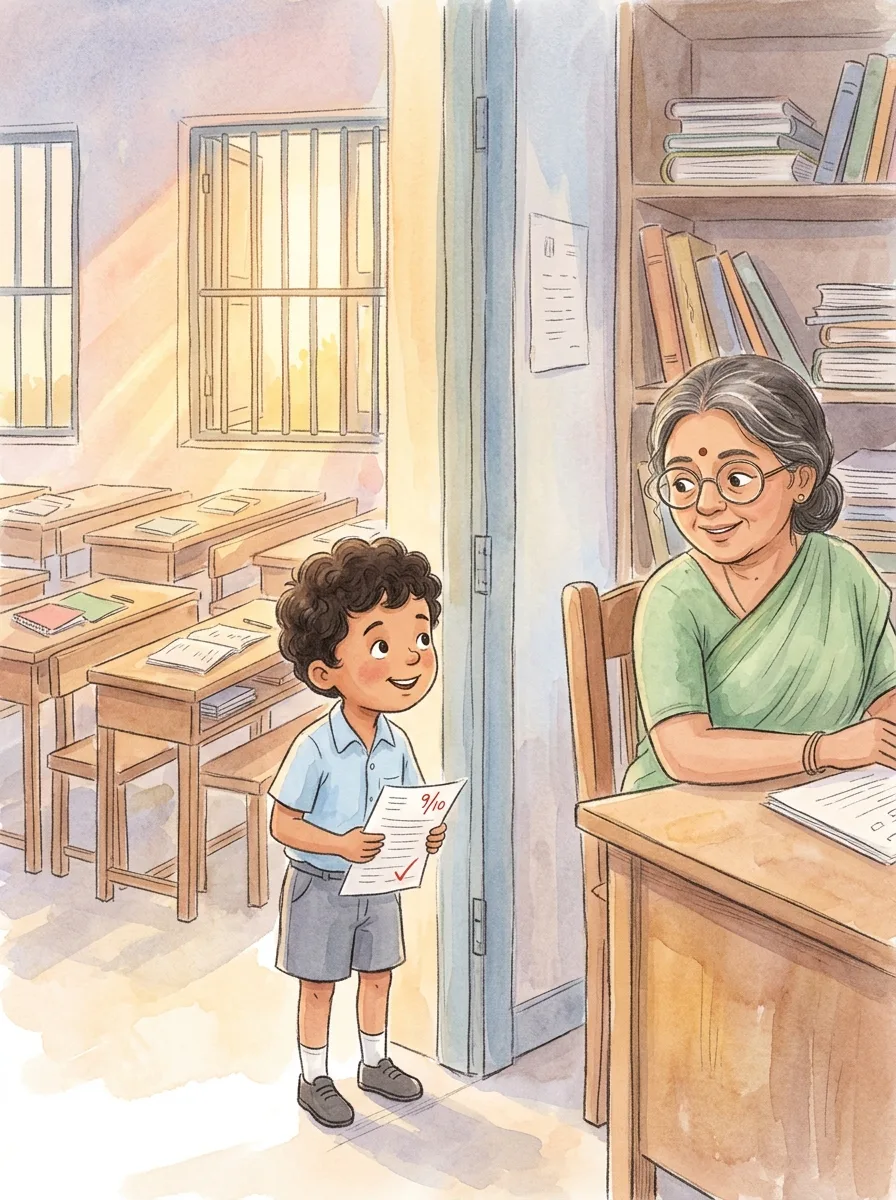
The maths test comes back and Your child has scored full marks, but one sum is wrong and Sir has ticked it by mistake. Nobody would ever know. At lunch the tick keeps staring up from the page, so Your child walks to the staff room, points it out, and loses two marks. Sir smiles and says those two marks were the most valuable ones in the whole class.
Lesson: A true score is worth more than a perfect one
Honesty
Your child and the Fifty-Rupee Note
Your child and the Fifty-Rupee Note
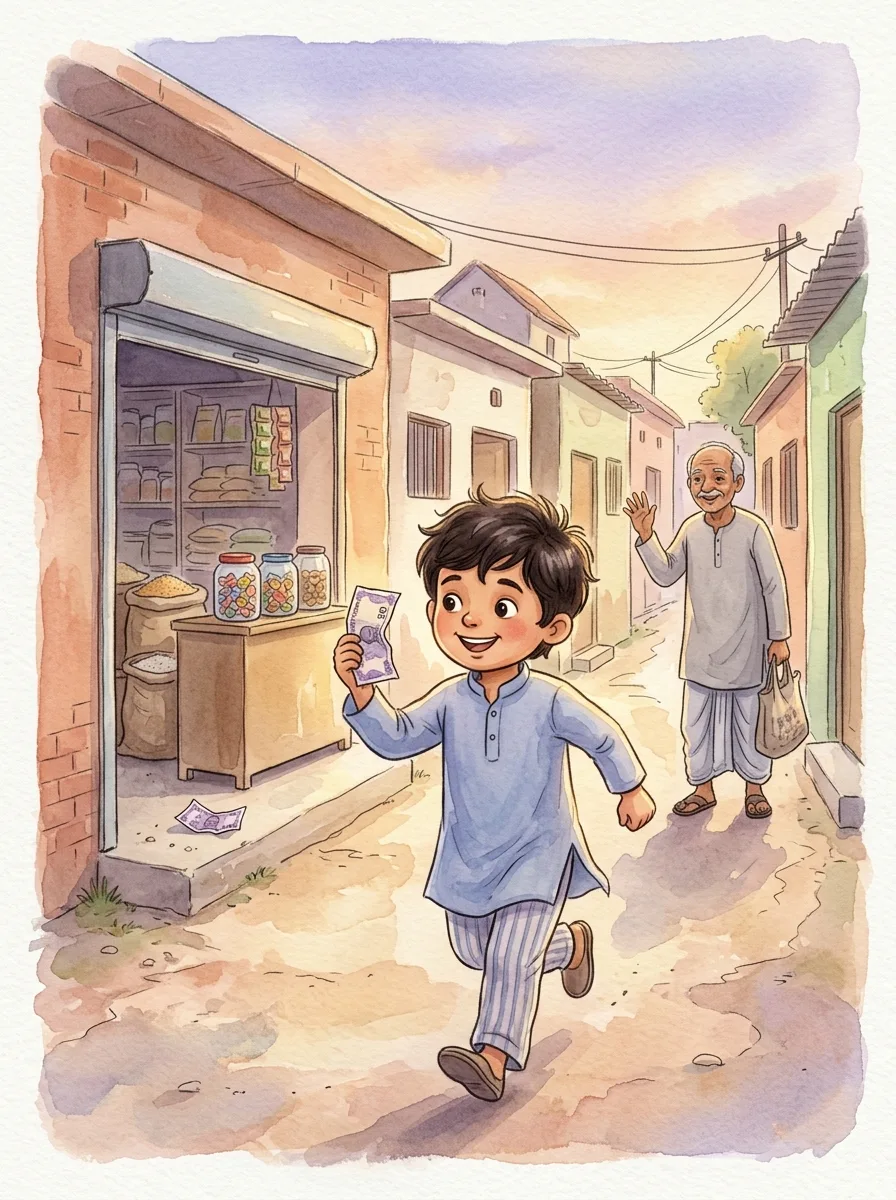
A crumpled fifty-rupee note lies on the floor of the colony kirana shop, right by the toffee jar. Your child picks it up and imagines the toffees. Then Your child remembers the old uncle who was counting coins at the counter a minute ago. Your child runs after him down the lane and hands it back. He gives Your child one toffee anyway, and it tastes better than fifty would have.
Lesson: What you return is worth more than what you keep
Honesty
Your child and the Broken Window
Your child and the Broken Window
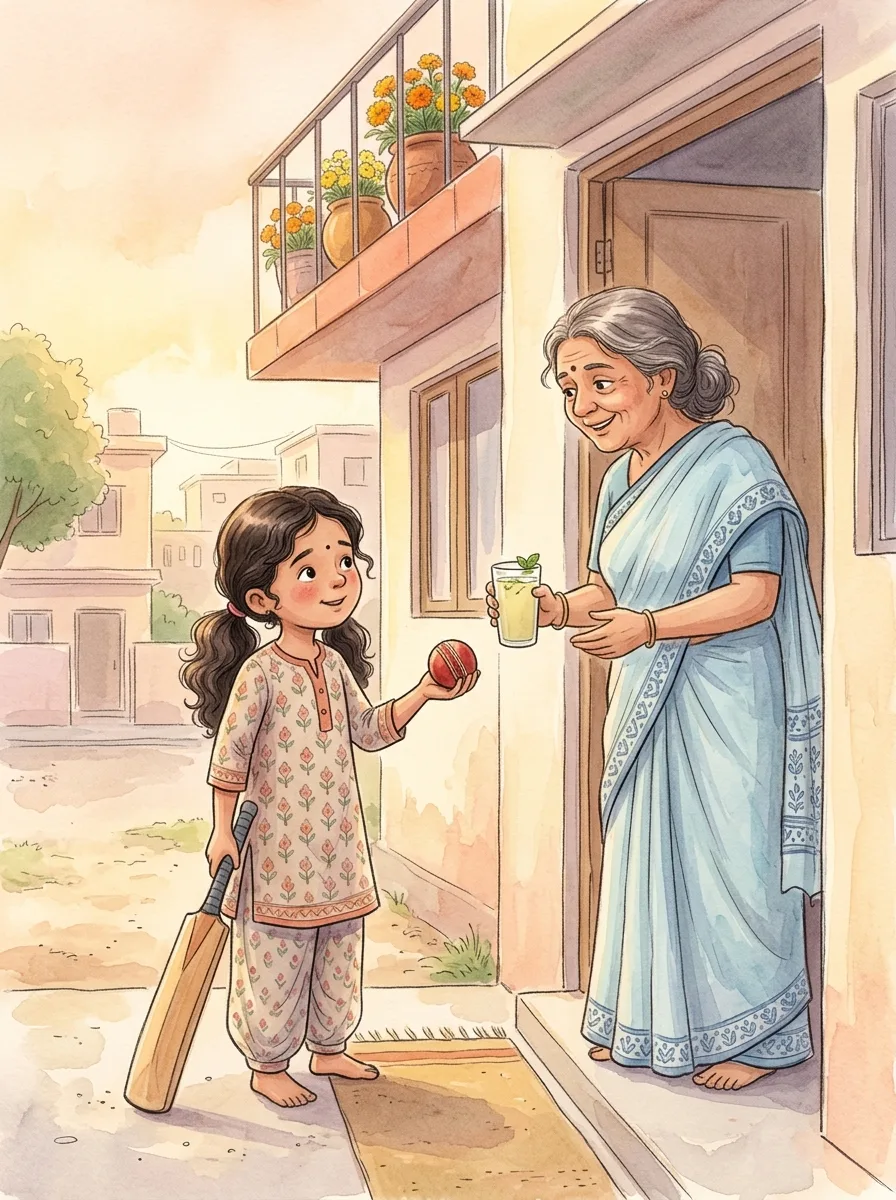
A cricket ball flies over the wall and there is a crash from the Sharma house. All the children scatter. Your child stands frozen with the bat, then walks to the door and rings the bell. Mrs Sharma is upset about the glass, but she sits Your child down with a glass of nimbu pani and says that in twenty years, Your child is the first child who ever came to say sorry.
Lesson: Owning up is the bravest shot you can play
Honesty
Your child and the Shopkeeper's Change
Your child and the Shopkeeper's Change
At the corner shop, the busy uncle hands Your child change for a hundred instead of fifty. Nobody would ever know, and it is exactly enough for the cricket ball Your child has been saving for. Your child walks halfway home, stops, and walks back. The uncle counts the coins twice, then reaches under the counter and gives Your child a toffee, and a nod that feels bigger than the ball.
Lesson: Being honest when nobody would know is the truest kind
Honesty
Your child and the Homework That Was Not Done
Your child and the Homework That Was Not Done
Your child forgot the maths homework, and the friend in the next seat whispers, 'Say the dog ate it.' There is no dog. When Miss asks, Your child takes a breath and says the truth: forgot it, watched cricket instead, sorry. Miss says the honesty earns one extra day, no punishment. The friend, who said the dog story, has to stay in at break.
Lesson: The truth costs less than a lie in the end
Honesty
Your child and the Cracked Phone Screen
Your child and the Cracked Phone Screen
Papa's phone slips from Your child's hands and the screen cracks like a spider's web. Papa is at work; nobody saw. Your child could put it back on the table and say nothing. Instead, Your child waits at the door with the phone in both hands and tells Papa the moment he comes in. Papa is upset about the phone, and then he says thank you, because the truth was harder than the fall.
Lesson: Tell the truth first, before anyone has to ask
Honesty
Your child and the Marks That Were Added Wrong
Your child and the Marks That Were Added Wrong
The test comes back with ninety-two, and Your child is thrilled, until adding the marks shows the teacher made a mistake: it should be eighty-two. Ninety-two would make Mummy so happy. Your child takes the paper to the teacher's desk anyway. The teacher corrects it, and then writes 'Honest' at the top in red. Mummy frames that paper, not the ninety-two.
Lesson: An honest eighty-two is worth more than a false ninety-two
Honesty
Your child and the Neighbour's Mangoes
Your child and the Neighbour's Mangoes
The neighbour's mango tree leans over the wall, and the cousins dare Your child to grab the ripest one while the neighbour is out. Your child climbs the wall, then stops and climbs down. Instead, Your child knocks on the neighbour's door that evening and asks if the children can have the ones on their side. She laughs, hands over a whole basket, and says the asking was the sweetest part.
Lesson: Asking gets you more than taking, and you can look people in the eye
Honesty
Your child and the Lie That Grew
Your child and the Lie That Grew
Your child tells a small lie about a lost library book, and by the next day it needs a second lie to cover it, and then a third. By Friday, Your child cannot remember what was said to whom and cannot sleep. On Saturday, Your child goes to the librarian and tells the whole tangled truth. The fine is ten rupees. The sleep that night is worth a thousand.
Lesson: One small lie needs many more; one truth needs none
Honesty
Your child and the Friend Who Copied
Your child and the Friend Who Copied
In the exam, Your child's best friend keeps trying to look at the answers, and whispers that friends help. Your child covers the paper. Afterwards the friend is angry and will not talk. Your child does not give in, but that evening goes to the friend's house and offers to study together every day for the next test. They do. The friend scores higher than Your child, honestly.
Lesson: Real help is teaching, not letting someone copy
Honesty
Your child and the Wallet on the Bus
Your child and the Wallet on the Bus
On the school bus, Your child finds a wallet under the seat, thick with notes and a photo of two little girls. The older boys say finders keepers. Your child hands it to the conductor, who looks inside, finds a card, and phones the number. That evening a tired man comes to the bus stop with his two daughters, and the smaller one gives Your child a drawing of a bus.
Lesson: What is lost is still someone's, and they are waiting for it
Honesty
Your child and the Broken Promise
Your child and the Broken Promise
Your child promised Dadi to water her plants while she was away, and forgot for four days. The tulsi is drooping. When Dadi returns, Your child could say it was the heat. Instead Your child says, 'I forgot, and I am sorry.' Dadi is quiet, then says a promise forgotten and confessed can still be mended. Together they water every plant, and the tulsi lifts its head by evening.
Lesson: Confess the forgotten promise, then mend it
Honesty
Your child and the Secret That Should Be Told
Your child and the Secret That Should Be Told
A classmate makes Your child promise not to tell that he has been going to the railway tracks after school, alone. It is a promise, but it is also dangerous. Your child worries all night, then tells Mummy, who tells his mother. The classmate is angry for a week. Then his mother comes to the door with a plate of laddoos and says thank you. He forgives Your child on the eighth day.
Lesson: Some secrets are too dangerous to keep, even for a friend
Honesty
Your child and the Honest Scorekeeper
Your child and the Honest Scorekeeper
Your child is the scorekeeper for the lane cricket match, and Your child's own team is one run behind. The other team's last run was definitely a run, though nobody saw it clearly but Your child. The captain says to count it out. Your child counts it in. The team loses by one run and grumbles. The next week, both teams ask for Your child as scorekeeper, because everyone trusts the score.
Lesson: Being trusted is worth more than winning once
Honesty
Your child and the Truth About the Goldfish
Your child and the Truth About the Goldfish
The little sister's goldfish has died while she was at Nani's, and Papa wants to replace it secretly so she never knows. Your child thinks about it and says no: she should be told the truth, gently. When she returns, Your child sits with her, tells her, and they bury the goldfish under the tulsi with a flower. She cries, then asks for a new one, and names it after the old one.
Lesson: A gentle truth is kinder than a comfortable lie
Honesty
The Jackal’s Honest Echo
A clever jackal discovers a cave that echoes every untruth louder than thunder. With Your childs help, the animals learn that cleverness is best when it walks beside honesty. The story should stay respectful and child-safe, using the epic or fable as inspiration rather than a heavy retelling. Your child faces a small choice connected to courage, dharma, wisdom, or friendship, then helps the scene resolve through kindness. The ending should carry the value clearly without sounding preachy.
Lesson: Cleverness should be guided by honesty and care.
Honesty
The Honest Lunchbox Hero
When an extra treat appears in Your childs lunchbox by mistake, the whole table waits to see what happens. Your child chooses honesty, returns it kindly, and discovers that doing right can make the heart feel full. The story should place Your child inside a real moral choice, where the easy path and the kind path are not the same. Through a small mistake, a helpful pause, and a brave decision, Your child learns the value by doing it. The ending should feel honest, warm, and earned.
Lesson: Honesty feels good even when nobody forces us to choose it.