Chhath Puja
Your child and the Ghat That Needed Sweeping
Your child and the Ghat That Needed Sweeping
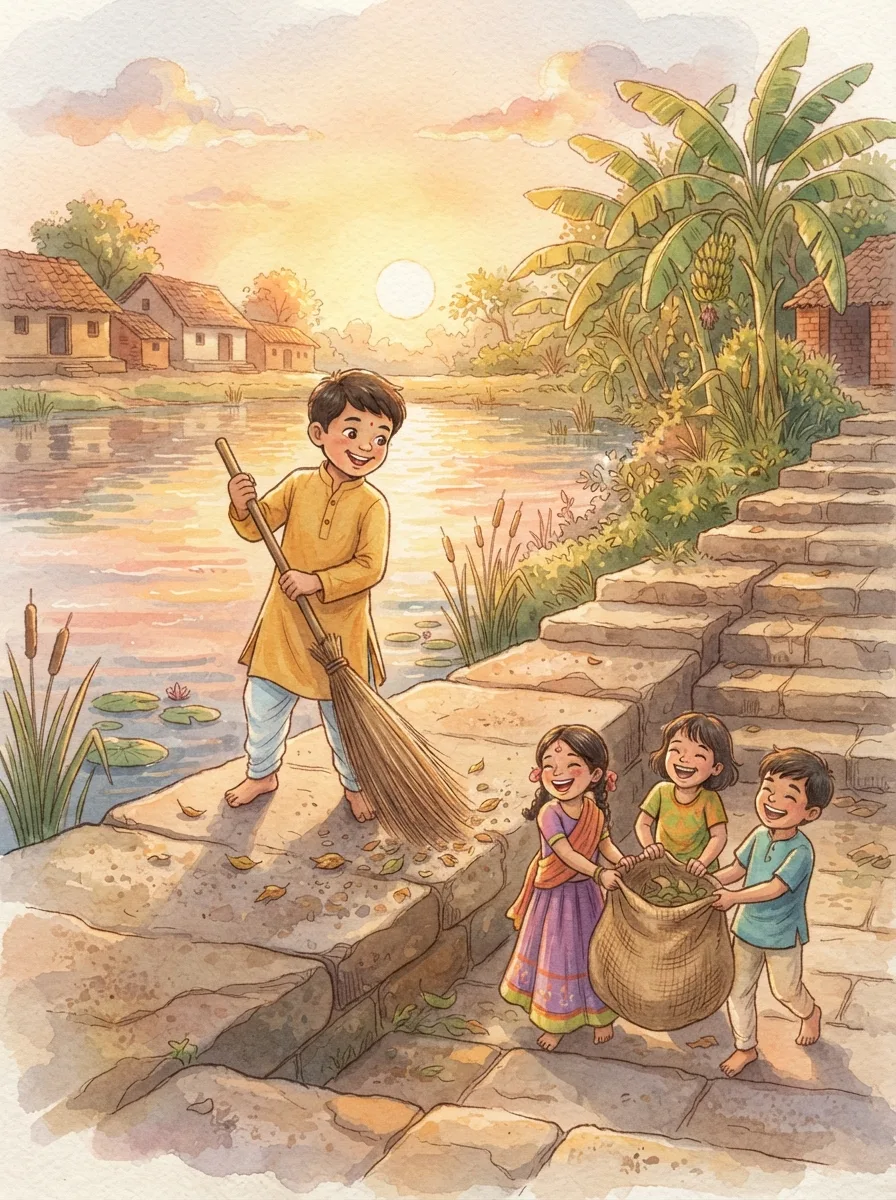
Two days before Chhath, the ghat by the pond is littered with dry leaves and plastic packets, and the elders are busy preparing the prasad. Your child borrows a broom from the tea stall, calls the neighbourhood children, and they sweep the steps clean from top to water, then pile the rubbish into a sack for the municipal cart. On Chhath evening the sun sets on a ghat so clean it glows.
Lesson: Clean the place first and the celebration takes care of itself
Chhath Puja
Your child and the Thekua That Crumbled
Your child and the Thekua That Crumbled
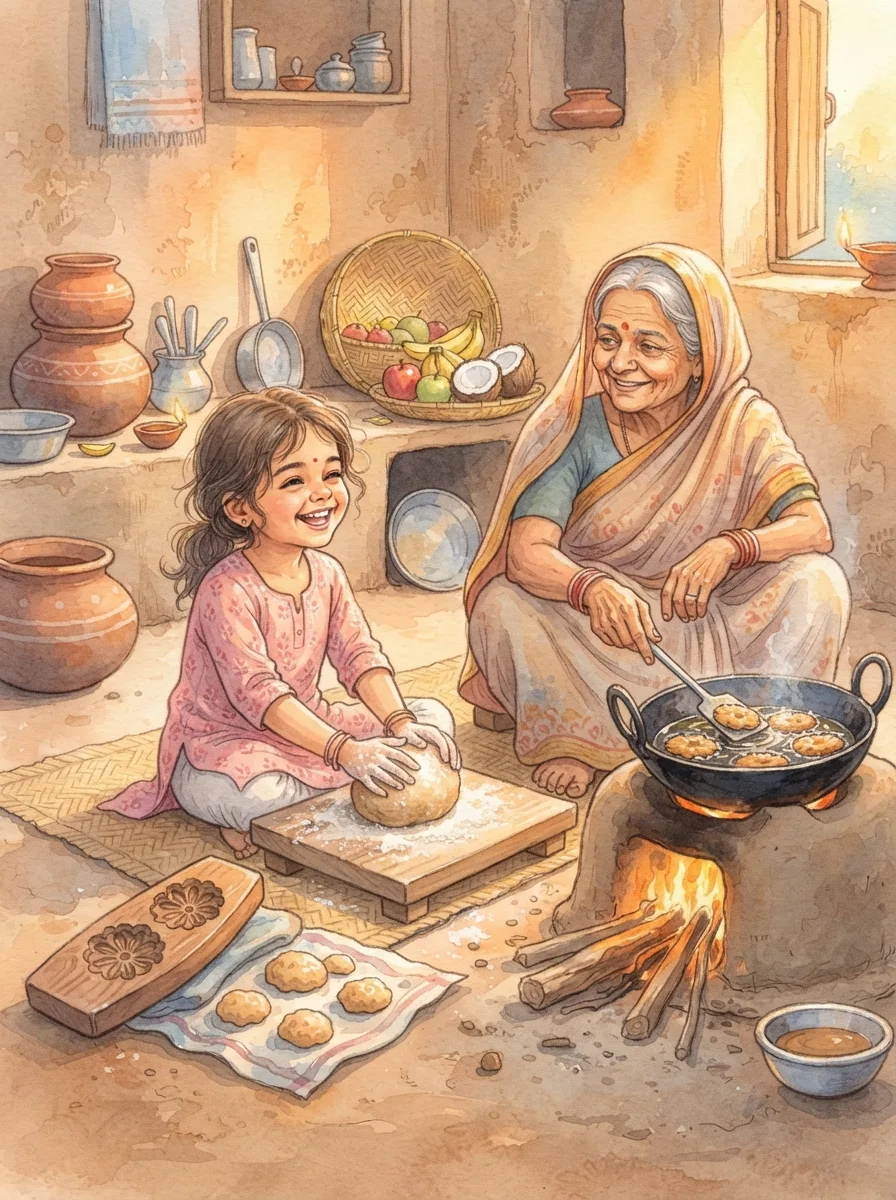
Dadi is pressing thekua dough into the wooden mould, and Your child wants to help. The first cookies crumble in the hot ghee. Dadi says the dough is too dry and Your child wants to give up. Instead, Your child adds jaggery water a spoon at a time, kneads slowly, and presses the flower pattern firmly. The next batch comes out golden and whole, and Dadi sets them aside as the first thekua for the soop.
Lesson: When it crumbles, adjust a little and try again
Chhath Puja
Your child's Soop of Fruit
Your child's Soop of Fruit
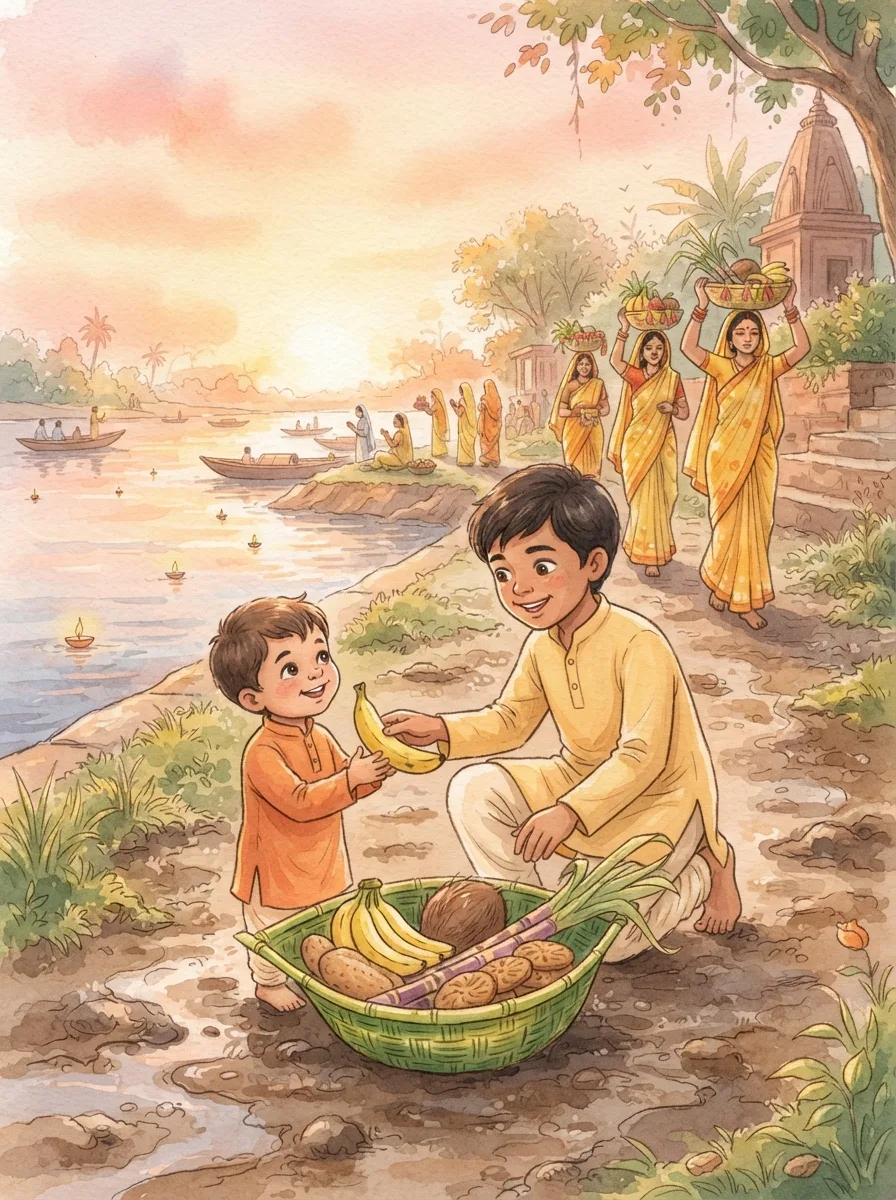
Amma gives Your child one bamboo soop to fill for the evening arghya. Your child arranges bananas, a coconut, sugarcane, water chestnuts and thekua so carefully that not one thing rolls out. On the way to the ghat, a small boy's soop tips and his oranges roll into the mud. Your child stops, splits the basket in half, and both children reach the water with a full offering each.
Lesson: An offering shared is still a full offering
Chhath Puja
Your child and the First Arghya to the Setting Sun
Your child and the First Arghya to the Setting Sun
The river is cold and crowded, and Amma is standing waist-deep in the water, holding her soop towards the orange sun. Your child is scared of the current and stays on the step. Then Your child sees Amma sway, tired from the fast. One careful step, then another, and Your child wades in to stand beside her, holding the edge of her sari. Together they pour the milk and water as the sun slips down.
Lesson: Standing beside someone is a kind of courage
Chhath Puja
Your child and the Cold Morning of the Rising Sun
Your child and the Cold Morning of the Rising Sun
It is still dark and misty when the family walks to the ghat for the morning arghya, and Your child is shivering under a shawl. Nana explains that they are thanking the sun for every warm day of the year. Your child spots an old woman with no shawl at all, standing alone by the water. Without a word, Your child slips off the shawl and wraps it round her shoulders. The first gold light warms them both.
Lesson: The best thanks for warmth is to pass it on
Chhath Puja
Your child and the Nahay Khay Kitchen
Your child and the Nahay Khay Kitchen
On the first day of Chhath, nahay khay, everything must be spotless: the kitchen is washed, and only Amma may cook the bottle gourd and rice on a clean chulha. Your child wants to sneak a biscuit but sees Amma has not yet had lunch because she is still scrubbing. So Your child rinses the steel plates, dries them in the sun, and lays the wet coconut leaves on the floor. Amma eats first that day, and Your child second.
Lesson: Helping someone finish their work is a way of feeding them
Chhath Puja
Your child and the Kharna Kheer
Your child and the Kharna Kheer
On kharna evening, after a whole day without water, Amma breaks her fast with rice kheer cooked in jaggery, and the neighbours are invited to share. Your child has been stirring the kheer with a long spoon for an hour and the arm aches. When the kheer is finally poured into clay bowls, Your child carries the first bowl not to the table but to the old bua who cannot walk down the stairs. She calls it the sweetest kheer in Patna.
Lesson: Serve the one who cannot come to the table first
Chhath Puja
Your child and the Song of the Chhath Ghat
Your child and the Song of the Chhath Ghat
At the ghat, the women sing Chhath folk songs asking the sun and Chhathi Maiya to bless every child, and their voices float over the water. Your child stands quietly, sure the words are too hard. Then an aunty puts a hand on Your child's shoulder and sings one line at a time. By the fourth song, Your child is leading the line 'Kanch hi bans ke bahangiya' and the aunties are clapping.
Lesson: A song learned one line at a time becomes yours
Chhath Puja
Your child and the Sugarcane Canopy
Your child and the Sugarcane Canopy
On the sand by the Ganga, Papa is building a little canopy of five sugarcane stalks tied at the top, under which the soops will rest for the night. The knot keeps slipping and the canes fall. Your child remembers how Nana ties the cows: loop, twist, loop again. Your child climbs on Papa's shoulders and ties the knot Nana's way. The canopy stands all night, with a clay lamp glowing under it.
Lesson: Small hands remember useful things when they watch closely
Chhath Puja
Your child and the Story of the Sun Who Listens
Your child and the Story of the Sun Who Listens
Nani says Chhath needs no priest and no temple: anyone can stand in the water and speak to the sun directly, and the sun listens to every honest heart. Your child, who has been hiding a broken cricket bat that belongs to Bhaiya, feels the words. That evening, standing in the pond beside Nani, Your child says sorry aloud to the sun, and afterwards to Bhaiya. Bhaiya laughs and says a bat can be mended.
Lesson: An honest heart needs no priest to be heard
Chhath Puja
Your child's Chhath in a Mumbai Flat
Your child's Chhath in a Mumbai Flat
Far from the Bihar village, the family lives on the sixth floor and there is no river for the arghya. Amma looks sad. Your child has an idea: a big plastic tub on the terrace, filled with water and floated with marigolds. Everyone in the building who has roots in Bihar and Jharkhand climbs up with their soops. When the sun sets between the tall buildings, twenty families are standing together in the tub water.
Lesson: Where there is a will, a terrace can become a ghat
Chhath Puja
Your child and the Lost Clay Lamp
Your child and the Lost Clay Lamp
Each soop needs one clay lamp burning through the night, and the family has exactly enough until one rolls off the tray and cracks on the ghat steps. The shops are all shut. Your child walks along the bank and finds the potter's family sitting with a basket of leftover lamps. Your child has no money but offers to help carry their soops into the water. They give not one lamp but five, and Your child hands the extras to families still searching.
Lesson: Offer what you have and you will rarely be short
Chhath Puja
Your child and the Fast That Was Not for Children
Your child and the Fast That Was Not for Children
Amma is keeping the thirty-six-hour Chhath fast without even water, and Your child declares that, being big now, the same fast will be kept. By afternoon, Your child is dizzy. Dadi says gently that children serve Chhathi Maiya by staying strong and helping, not by going hungry. Your child eats a banana, then spends the rest of the day fetching water, folding saris and holding Amma's hand at the ghat.
Lesson: There is more than one way to be devoted
Chhath Puja
Your child and the Rickshaw Full of Fruit
Your child and the Rickshaw Full of Fruit
The market is a whirl of coconuts, sugarcane, bananas and lemons, and Papa's cycle rickshaw is piled to the sky. On the bumpy road home, the rickshaw wala stops to rest and Your child notices he has bought nothing for his own family's Chhath. Papa is about to pay when Your child tugs his sleeve. They fill the rickshaw wala's empty jute bag with fruit from their own pile, and he pedals home singing.
Lesson: Look at the hands that carry your celebration
Chhath Puja
Your child and the Ghat After Chhath
Your child and the Ghat After Chhath
The morning arghya is over and the families are walking home with the prasad, but the ghat is scattered with leftover peels, broken diyas and empty packets. Your child looks back at the shining water and remembers the days of cleaning before the festival. Instead of joining the walk home, Your child picks up a bag and begins clearing the steps, and soon a dozen children join in. The sun climbs over a ghat as clean as it began.
Lesson: A festival ends well when you leave the place as you found it