Choose an adventure
Underwater story ideas for curious explorers
Choose a coral rescue, a submarine discovery, or a gentle sea-creature friendship and make your child the explorer at the centre of it.
Underwater
Your child and the Shy Octopus
Your child and the Shy Octopus
Suggested ages 3–5
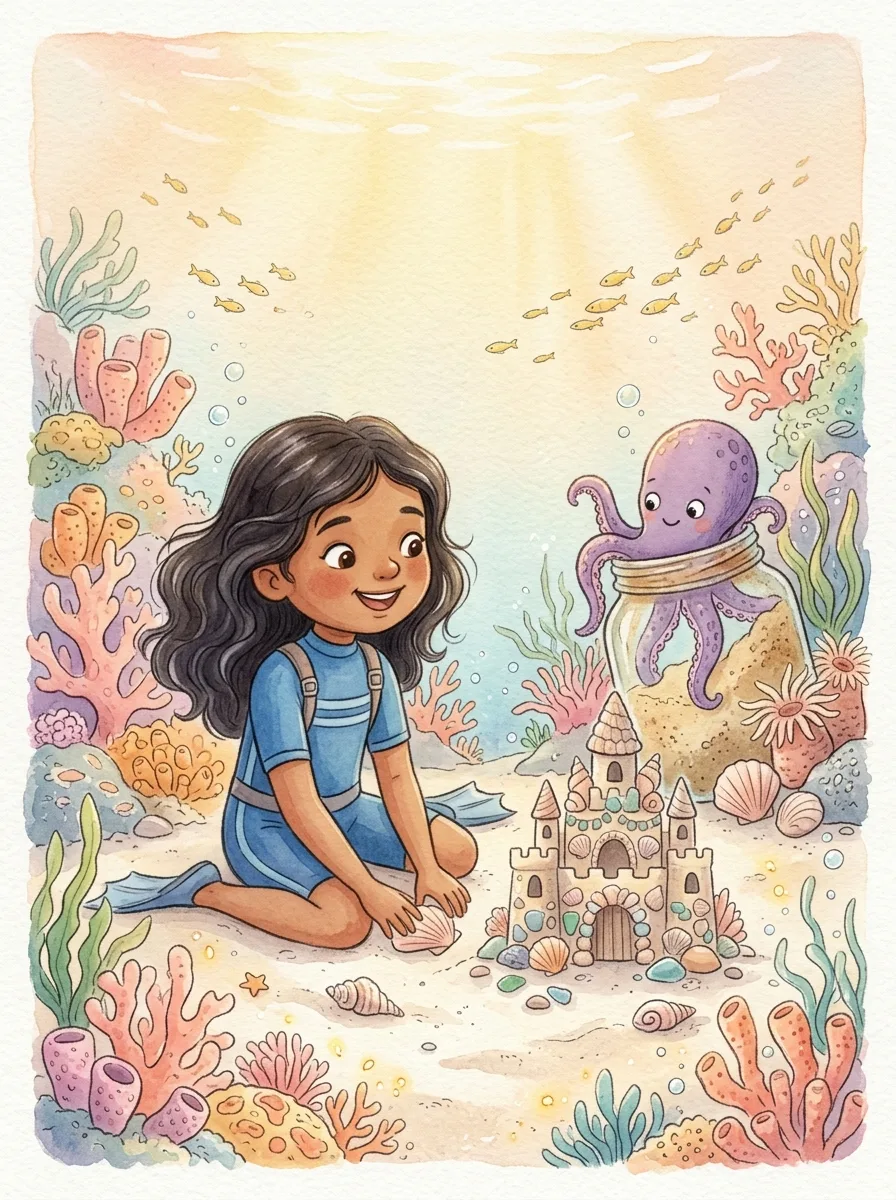
Deep in the coral reef lives an octopus who hides in a jar whenever anyone swims past. Your child does not chase her; instead Your child sits on the sand every day and builds shell castles. On the fifth day, one purple arm reaches out to add a pearl to the tallest tower. By the end of the week they are building together.
Patience is how shy friends learn to trust you
Underwater
Your child and the Mermaid Palace
Your child and the Mermaid Palace
Suggested ages 3–5
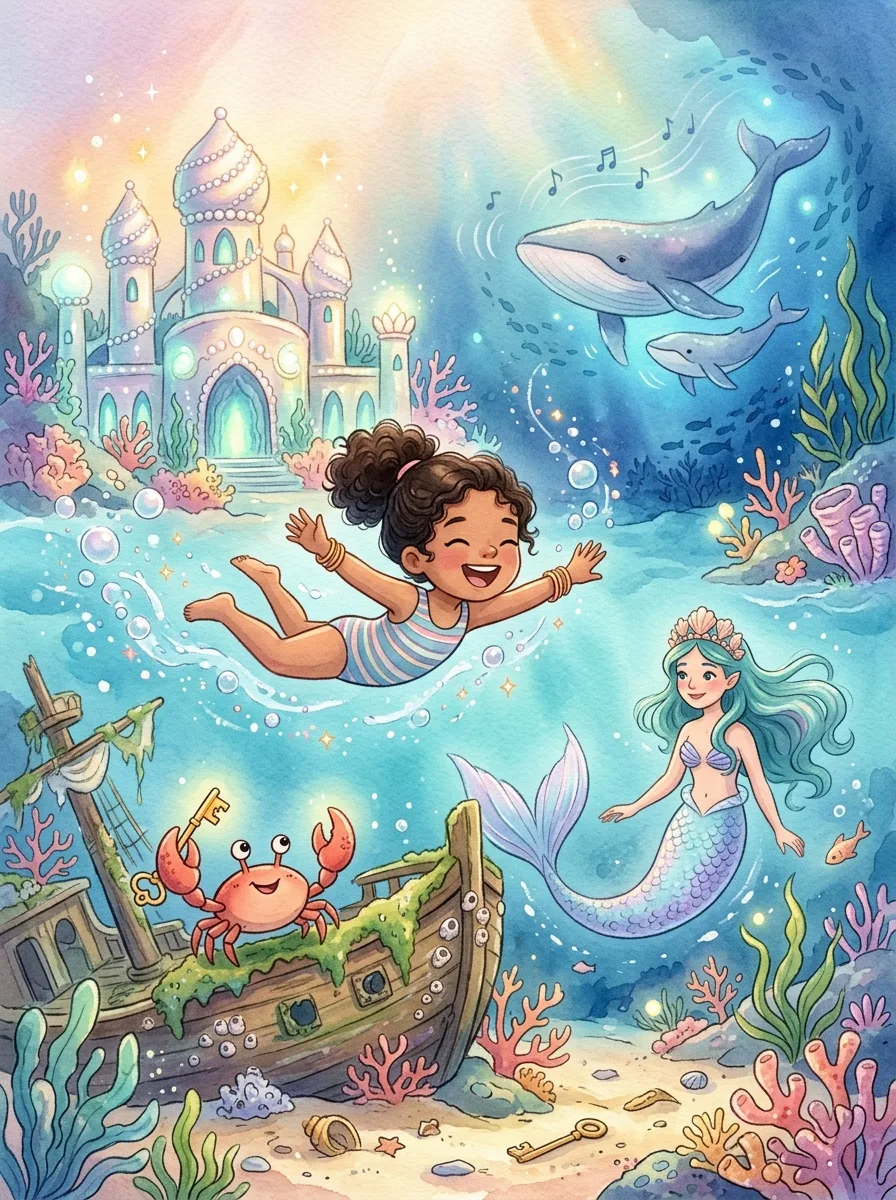
The mermaid queen has lost the key to the palace music room, and the whole sea has gone quiet. Your child follows a trail of bubbles down to a sunken ship where a crab is guarding the key because he thought it was a shiny snack. Your child trades him a bright bottle cap, and the palace fills with singing whales again.
A fair trade makes everyone happy
Underwater
Your child and the Submarine That Ran on Giggles
Your child and the Submarine That Ran on Giggles
Suggested ages 3–5
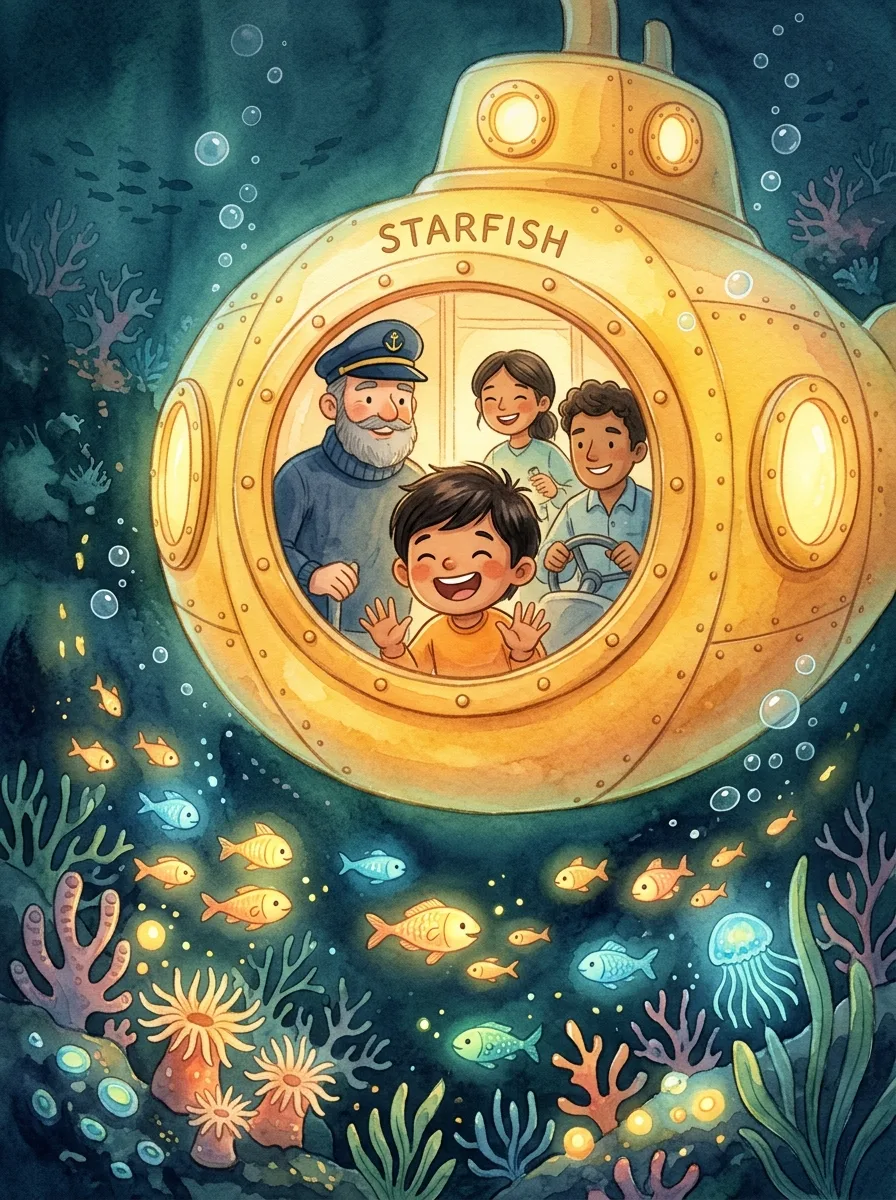
The little yellow submarine will only move when someone inside is laughing, and today everyone on board is worried about the dark deep water. Your child tells the silliest joke about a jellyfish who wanted socks. First the captain snorts, then the crew roars, and the submarine zooms down to find the glowing garden of lantern fish at the bottom.
A little laughter can carry you through the dark
Underwater
Your child and the Coral That Lost Its Colour
Your child and the Coral That Lost Its Colour
Suggested ages 3–5
The reef has gone pale and grey, and the fish are leaving. Your child swims down and finds the little cleaner shrimps have stopped working because the water is too cloudy with plastic. Your child spends a whole day collecting bags and bottles into a net, with a turtle carrying each load to the surface. By the next morning the shrimps are back, and one patch of coral has turned pink again.
Clean up and the colour comes back
Underwater
Your child and the Whale with the Sore Throat
Your child and the Whale with the Sore Throat
Suggested ages 3–5
The great blue whale cannot sing, and the whole ocean is quiet and sad without its song. Your child swims into its mouth, carefully, and finds a fishing net caught at the back of its throat. Working with the tiny fish who live there, Your child untangles it thread by thread. The whale coughs, breathes, and sings a note so deep that every fish in the sea comes to listen.
The biggest creature can need the smallest help
Underwater
Your child and the Shy Seahorse School
Your child and the Shy Seahorse School
Suggested ages 3–5
The seahorse school is having a race, and the smallest seahorse hides in the seaweed, too shy to swim in front of everyone. Your child does not push. Your child sits in the seaweed beside it and races it, just the two of them, along one blade of weed. Then two blades. Then out into the open. When the real race comes, the smallest seahorse finishes, and the school cheers loudest for it.
Practise in the seaweed before you race in the open