Social Studies
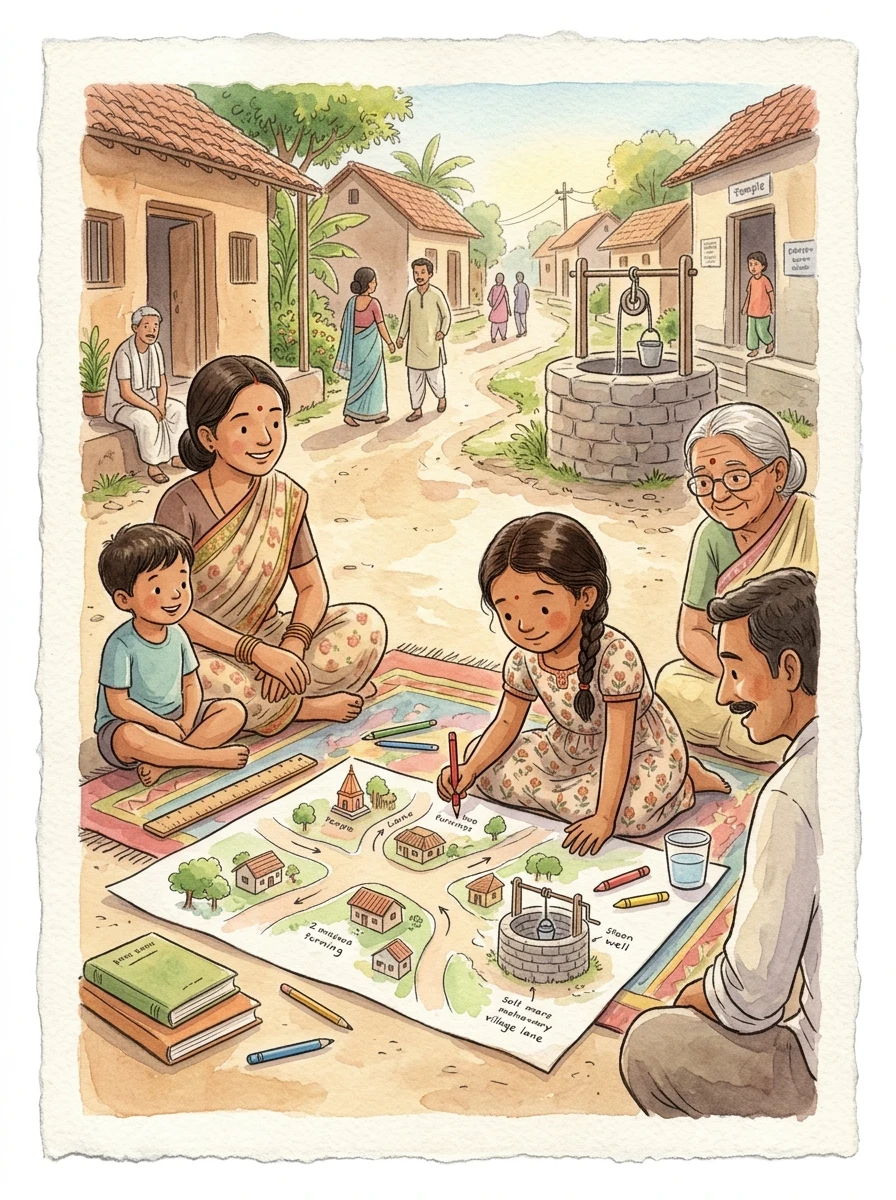
Your child and the Map of the Lane
Your child and the Map of the Lane
Asked to draw a map of the way to school, Your child discovers that the lane has two turns nobody counted and a well that is not on any drawing. The finished map is used by a new family the very next week.
Lesson: A place you map is a place you finally know
Social Studies
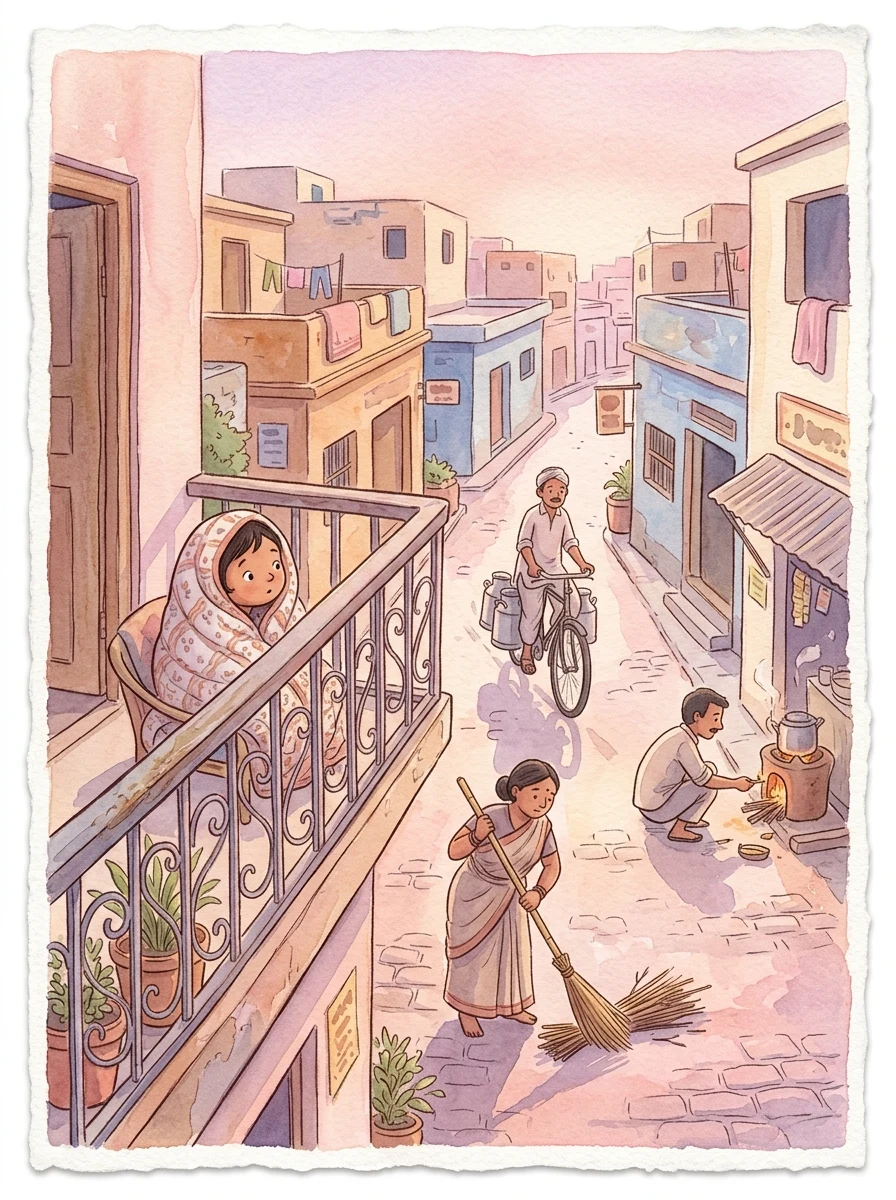
Your child and the People Who Start Early
Your child and the People Who Start Early
Woken by a bad dream at five in the morning, Your child watches from the balcony: the milkman, the sweeper, the newspaper boy, the tea stall owner lighting his stove. By breakfast the town looks completely different.
Lesson: A town is the people awake before you
Social Studies
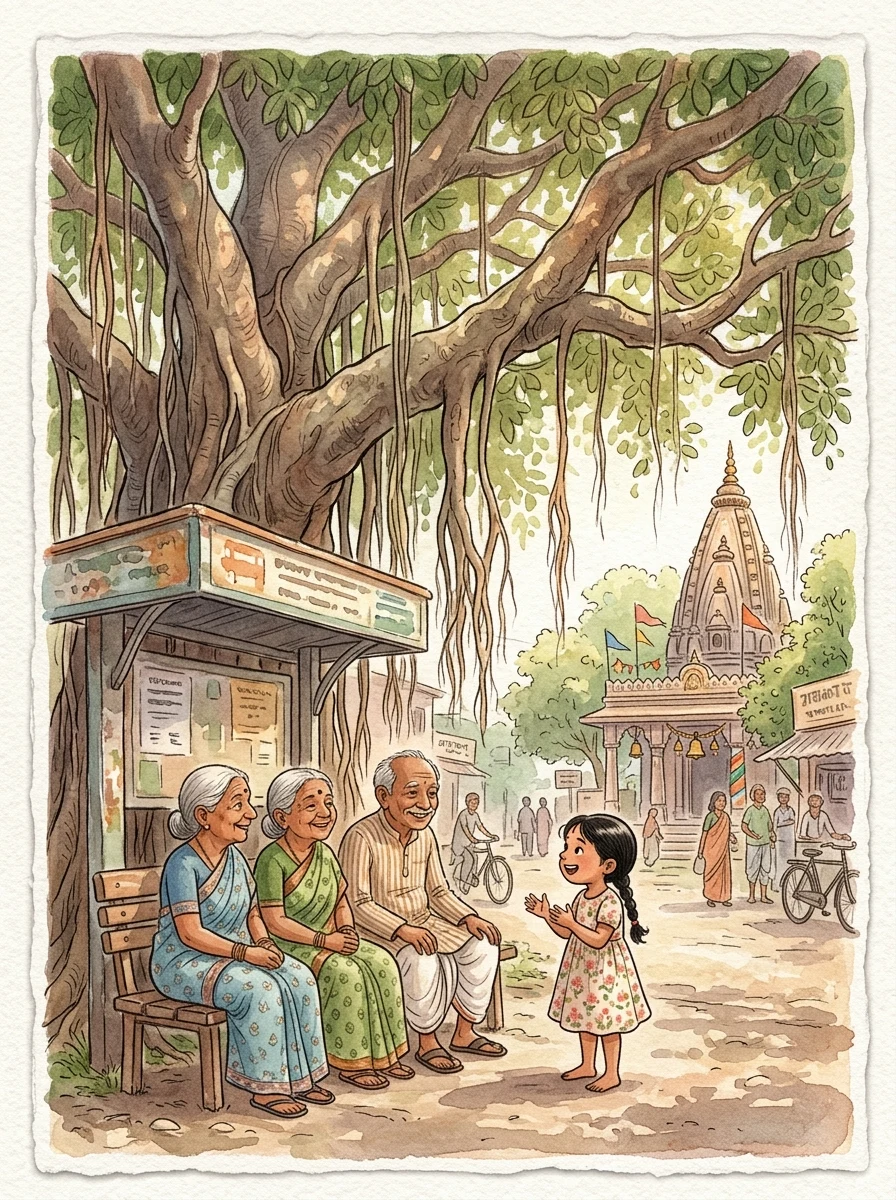
Your child and the Oldest Thing in Town
Your child and the Oldest Thing in Town
The homework is to find the oldest thing in the neighbourhood. Everyone says the temple, but Your child asks three grandparents and learns the banyan by the bus stop was already big when they were children.
Lesson: Ask the people who were here first
Social Studies
Your child and the Election for Class Monitor
Your child and the Election for Class Monitor
Voting for class monitor with folded paper slips and a shoebox ballot box feels like a very grown-up thing to do, and Your child is surprised how carefully everyone thinks before writing a name down. The count, done twice to be sure, decides it fairly.
Lesson: A fair count matters as much as a fair vote
Social Studies
Your child and the Compass in the Park
Your child and the Compass in the Park
A toy compass that always points the same direction no matter how many times Your child spins around seems like magic until Dada explains it is simply always pointing north. Finding the way back to the gate becomes a lot easier after that.
Lesson: Knowing one fixed direction helps you find all the others
Social Studies
Your child and the Vegetable Vendor's Trade
Your child and the Vegetable Vendor's Trade
The vegetable vendor at the corner buys from a wholesale market before sunrise and sells to the whole lane by evening, and Your child follows the chain of it from one relative to the next until the tomato on the dinner plate finally makes sense as a whole journey.
Lesson: Nothing on your plate arrives by itself
Social Studies
Your child and the Family Tree Project
Your child and the Family Tree Project
Drawing a family tree for homework means asking every relative in the house a question about people Your child has never met, and Dadi's stories turn out to go back further than any branch on the page can fit. The chart gets a second sheet taped on.
Lesson: A family is bigger than the page you start with
Social Studies
Your child and the Panchayat Meeting
Your child and the Panchayat Meeting
A village panchayat meeting about fixing the broken hand pump seems boring from outside, until Your child realises every person speaking is actually solving a real problem that affects the whole street. The pump is working again within the week.
Lesson: Grown-up meetings often solve problems you didn't know were problems
Social Studies
Your child and the Currency from Far Away
Your child and the Currency from Far Away
A foreign coin from Mausa's travels looks nothing like the rupee Your child knows, with different numbers, a different animal, and a different feel entirely. Lining it up next to five rupees on the table makes the differences and the similarities both obvious.
Lesson: Different countries agree on the idea of money but not the details
Social Studies
Your child and the Festival Map
Your child and the Festival Map
A school project to mark which festival is celebrated in which state fills an entire map of India with coloured stickers, and Your child is amazed at how many different ones land on the very same week in different colours and different names.
Lesson: The same season can mean different celebrations in different places
Social Studies
Your child and the Old Photograph of the Lane
Your child and the Old Photograph of the Lane
A black-and-white photo found in Dada's album shows the same lane Your child walks to school on, except with no shops, no streetlights, and half as many houses. Comparing it to the lane today takes up an entire evening of pointing and comparing.
Lesson: The place you know has a past you never saw
Social Studies
Your child and the Bus Conductor's Route
Your child and the Bus Conductor's Route
The bus conductor knows every single stop on the route by heart without ever looking at a list, and Your child tests this by asking about a stop from the very middle of the journey. The answer comes back instantly, correct down to the landmark.
Lesson: Some people carry whole maps just in their memory
Social Studies
Your child and the Two Flags on the Wall
Your child and the Two Flags on the Wall
A school project about India's neighbouring countries means pinning up flags Your child has never really looked at closely before, and the small differences between similar-looking ones become the most interesting part of the whole display.
Lesson: Looking closely reveals differences that looking quickly misses
Social Studies
Your child and the Community Helper Day
Your child and the Community Helper Day
A school visit means shaking hands with the local postman, the fire station officer and the milk delivery man all in one morning, and Your child realises each of them starts working before most people in the colony are even awake.
Lesson: Many people's early mornings make everyone else's day easier
Social Studies
Your child and the Well That Fed the Village
Your child and the Well That Fed the Village
An old stepwell on the edge of the village, mostly dry now, once supplied water to the whole area before the taps arrived, and Your child climbs down a few steps with Dadi to see just how deep people used to have to go for a single bucket.
Lesson: Understanding the old way makes you value the easy way more
Social Studies
Grandmas Recipe Map
A flour-dusted recipe map leads Your child through kitchen clues from grandma. Measuring, tasting, and remembering family stories, Your child learns that recipes are more than food; they are love written in flavors. The story should unfold through smells, tastes, family memories, and small helpful jobs. Your child follows clues or steps, learns why each person matters, and turns a kitchen or market problem into togetherness. The ending should feel cozy, grateful, and rooted in care shared across generations.
Lesson: Family traditions can be shared through food, stories, and helping hands.