English
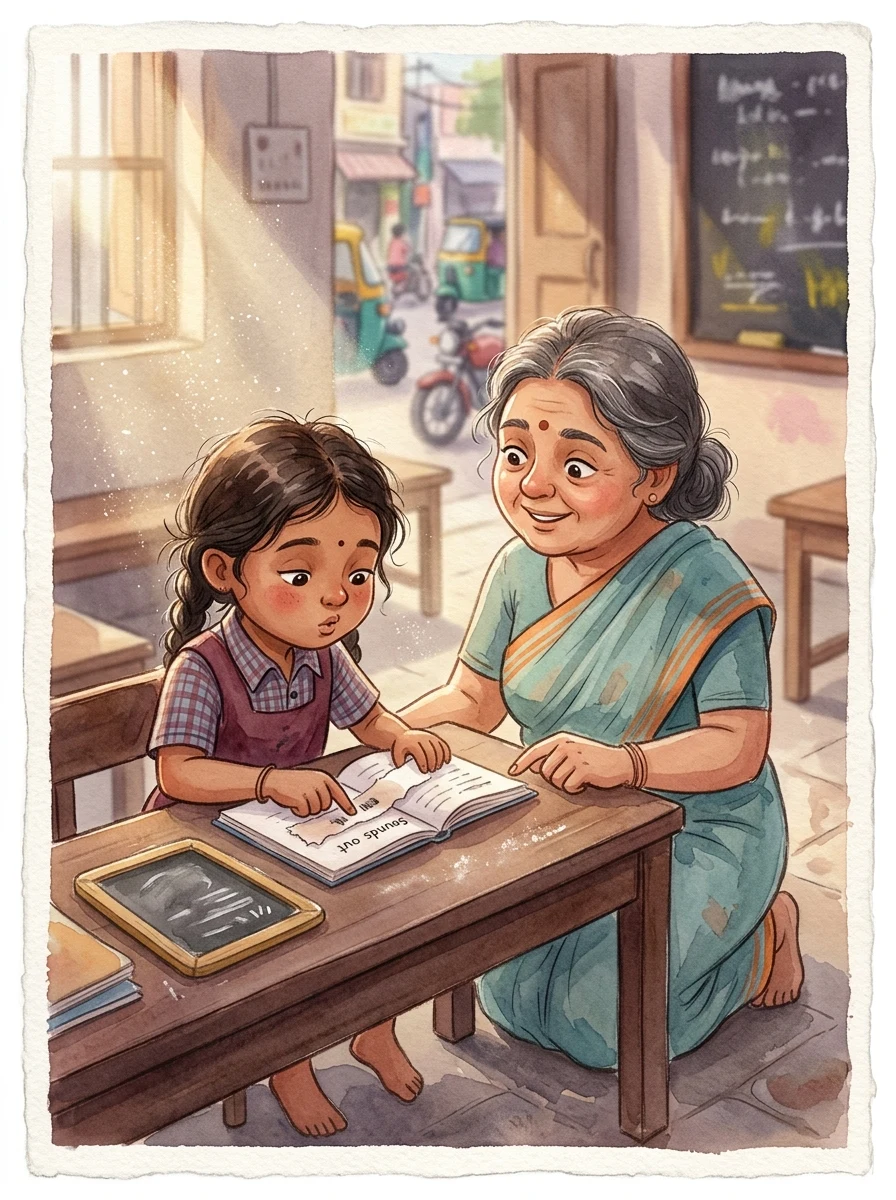
Your child and the Word That Would Not Sit
Your child and the Word That Would Not Sit
Every time Your child tries to read "through", the letters slide about. The teacher covers all but three letters at a time, and slowly the word stops being a wall and becomes a sound that can be walked across.
Lesson: Break a hard word and it stops being hard
English
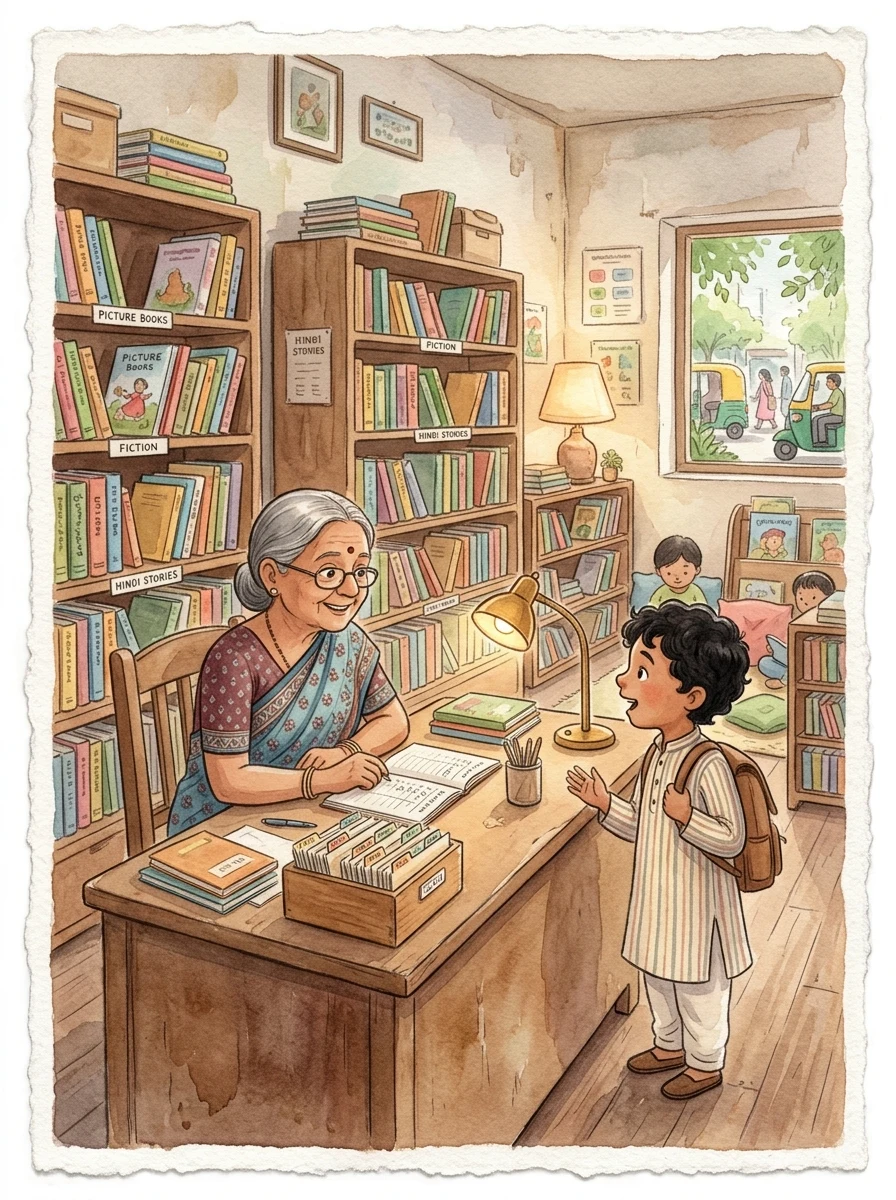
Your child and the Lost Library Card
Your child and the Lost Library Card
The library card is gone and the librarian needs the name of the last book borrowed. Your child cannot remember the title but remembers the first letter, the picture on the cover, and one rhyming word from page four, and together it is enough.
Lesson: What you remember is more than you think
English
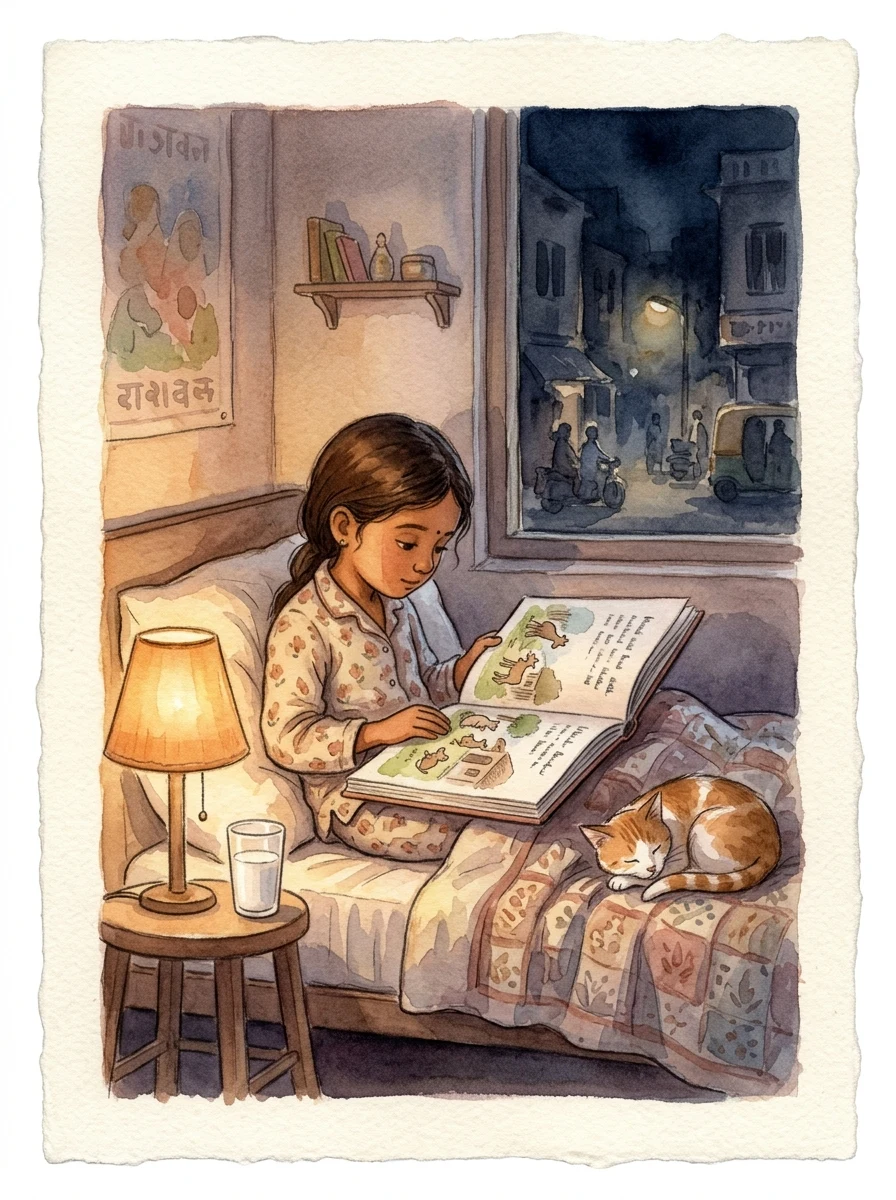
Your child and the First Whole Page
Your child and the First Whole Page
For weeks Your child has read a line at a time with someone else finishing the sentence. Tonight, with nobody to help, the whole page goes by, and the last full stop lands like the end of a long walk.
Lesson: One page you read alone is worth ten read for you
English
Your child and the First Letter Ever Written
Your child and the First Letter Ever Written
Writing to a cousin who moved to another city means choosing every word carefully instead of just talking, and Your child crosses out the first two lines twice before getting the greeting right. The reply, when it arrives, is read on the doorstep before even going inside.
Lesson: Writing down a thought makes you choose it carefully
English
Your child and the Rhyme That Would Not Come
Your child and the Rhyme That Would Not Come
A poem for the school magazine needs a word that rhymes with 'kite', and every guess sounds wrong until 'night' finally lands in exactly the right place. Your child reads the finished four lines out loud six times just to hear how it sounds.
Lesson: The right word is worth the wait
English
Your child and the New Word a Day
Your child and the New Word a Day
Papa's rule is one new word from the dictionary every morning, used correctly by dinner or it does not count. 'Enormous' seems easy until Your child has to say a whole sentence with it at the table, and everyone claps when it finally lands right.
Lesson: A word is not yours until you use it
English
Your child and the Opposite Game
Your child and the Opposite Game
A cousin's game of shouting a word and getting the exact opposite back seems easy until 'empty' stumps everyone at the table for a full minute. Your child finally gets it, and the game speeds up so fast nobody can keep score anymore.
Lesson: Opposites make you think harder than they look
English
Your child and the Comma That Changed Everything
Your child and the Comma That Changed Everything
A sentence about eating, grandma and the dog reads very differently once the teacher adds one small comma in the right place, and the whole class laughs at how much trouble was hiding in one missing mark. Your child never forgets where commas go after that.
Lesson: A tiny mark can change a whole meaning
English
Your child and the Show and Tell Nerves
Your child and the Show and Tell Nerves
Standing in front of the whole class to talk about a favourite toy seemed impossible the night before, but saying it out loud to the mirror three times at home makes the real thing feel almost easy. The class claps before Your child even finishes the last sentence.
Lesson: Practising out loud makes the real moment smaller
English
Your child and the Spelling Bee Trick
Your child and the Spelling Bee Trick
The word 'necessary' has tripped up every cousin at the family spelling bee for two years running, until Your child invents a little rhyme to remember the double letters. The rhyme spreads through the whole family by the next gathering.
Lesson: A trick to remember something is worth inventing
English
Your child and the Newspaper Headline
Your child and the Newspaper Headline
Papa's morning newspaper has a headline in huge letters that Your child cannot fully understand, so Papa reads just that one sentence slowly, explaining each hard word. By the time chai is finished, the headline finally makes complete sense.
Lesson: One sentence explained well is worth more than a whole page skimmed
English
Your child and the Storytelling Circle
Your child and the Storytelling Circle
Each child in the circle has to add one sentence to a story that keeps getting stranger, and Your child's turn lands right when the story needs a talking elephant to make sense of everything before it. The whole circle bursts out laughing.
Lesson: A good story can go anywhere if you follow where it leads
English
Your child and the Handwriting Competition
Your child and the Handwriting Competition
Messy, hurried handwriting has always been Your child's excuse for finishing homework fast, until a school competition means slowing every single letter down. The neat page that results looks like it belongs to someone else entirely.
Lesson: Slowing down can change how your own work looks
English
Your child and the Library Corner Club
Your child and the Library Corner Club
A small reading corner nobody uses becomes a proper club once Your child and two friends start meeting there every Friday to talk about whatever book each one is reading. By the third week, four more classmates want to join.
Lesson: Talking about a book makes it twice as good
English
Your child and the Word That Meant Two Things
Your child and the Word That Meant Two Things
A joke about a 'bat' flying and a 'bat' hitting a ball confuses Your child completely until Didi draws both on a page side by side. Once the picture is there, the joke that made no sense suddenly seems obvious.
Lesson: The same word can mean two completely different things
English
Alphabet Treasure Trail
The alphabet letters have hidden themselves around a friendly library, each guarding a tiny treasure sound. Your child follows A to Z clues and discovers that letters are keys that unlock every story door. The story should turn words, letters, sounds, or sentences into an adventure trail. Your child listens closely, solves a reading clue, and helps a character unlock a message. The ending should show that language is not only practice; it is a key to friendship, imagination, and confidence.
Lesson: Letters become exciting when children use them as keys to stories and sounds.
English
Phonics Forest Friends
In Phonics Forest, animals can only find home when their beginning sounds are matched. Your child helps Bear, Bird, and Bunny hear the sounds at the start of their names, learning that careful listening makes reading bloom. The story should turn words, letters, sounds, or sentences into an adventure trail. Your child listens closely, solves a reading clue, and helps a character unlock a message. The ending should show that language is not only practice; it is a key to friendship, imagination, and confidence.
Lesson: Sound awareness builds early reading confidence.