Upanishads
Your child and Nachiketa's Question
Your child and Nachiketa's Question
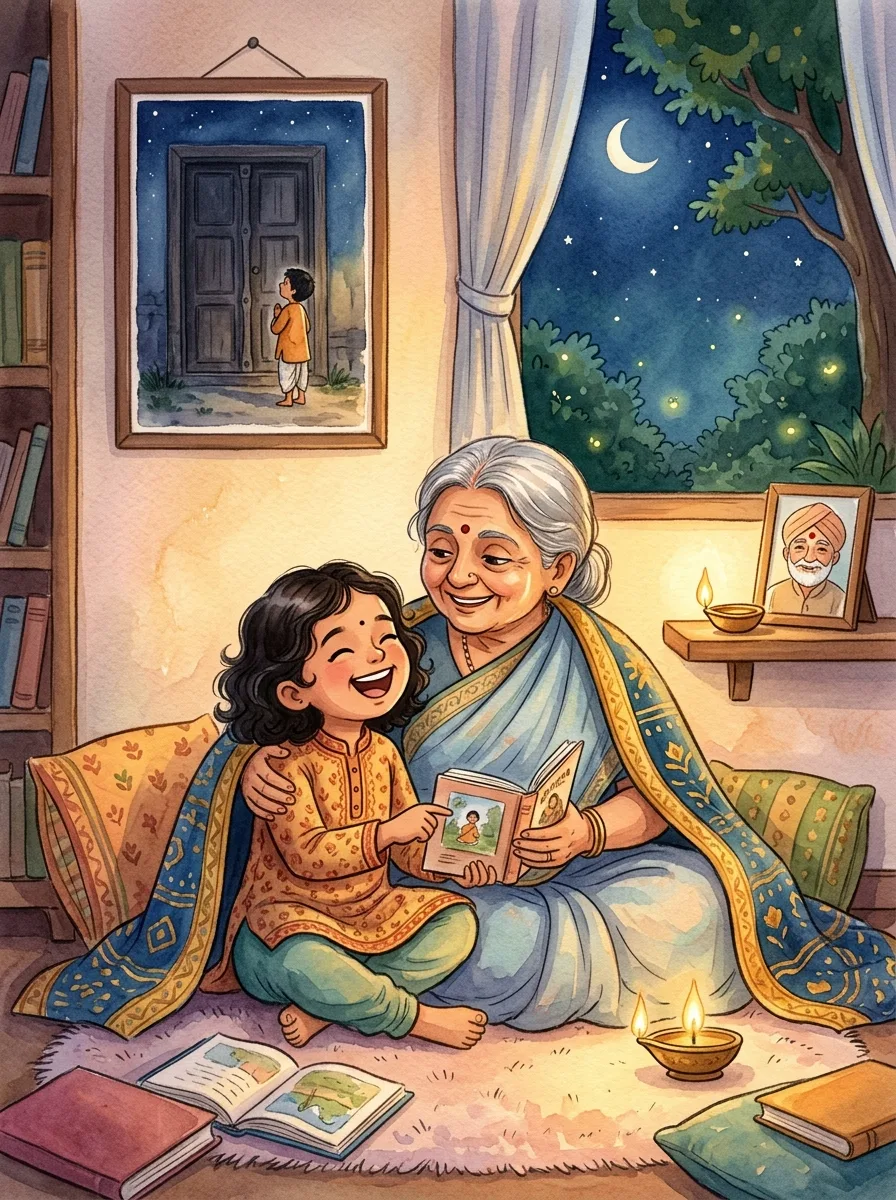
Nani tells the story of Nachiketa, the boy who waited three days at Yama's door just to ask a question nobody wanted to answer. Your child has a question too: why did Nana have to go away? That night Your child asks it out loud instead of hiding it, and Nani holds Your child close and answers as honestly as she can, and the room feels lighter.
Lesson: Brave questions deserve honest answers
Upanishads
Your child and the Seed Inside the Banyan
Your child and the Seed Inside the Banyan
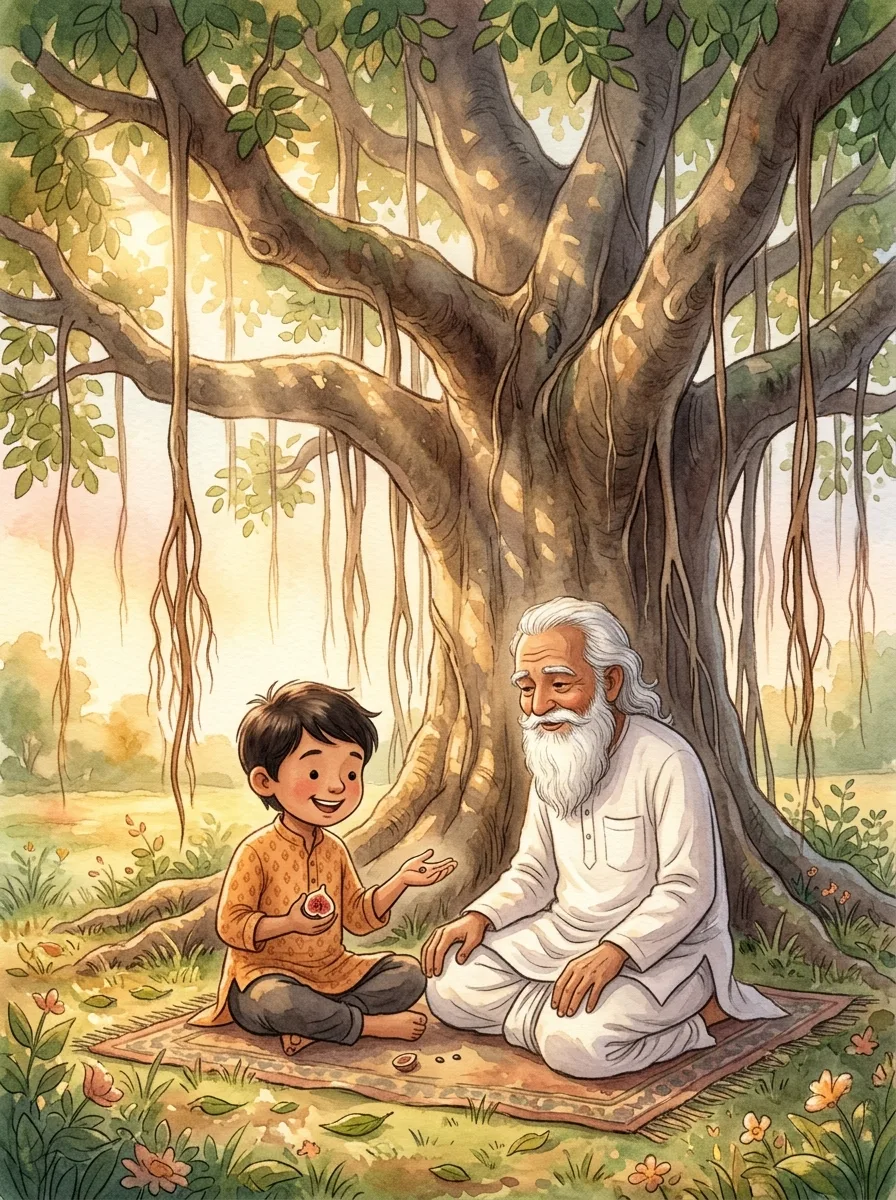
Under the giant banyan tree, the teacher asks Your child to split a tiny fig and then split one of the seeds inside. There is nothing there, or so it seems. "From that nothing grows this whole tree," says the teacher, "and the same quiet nothing is inside you." Your child presses the seed into the earth by the roots and promises to come back every year to see what it becomes.
Lesson: Great things begin from something too small to see
Upanishads
Your child and Satyakama's Answer
Your child and Satyakama's Answer
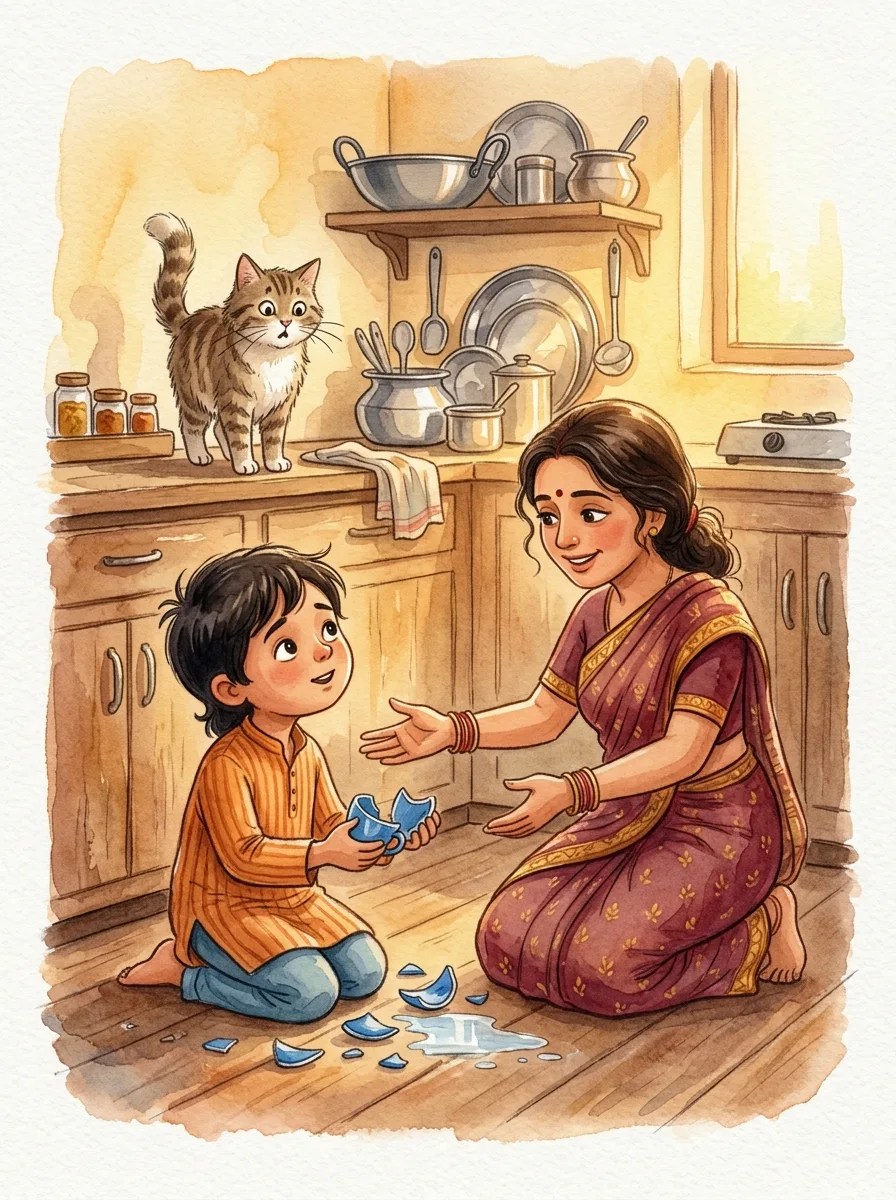
Satyakama got into the ashram not because he was clever but because he told the truth about who he was, even when it was hard. Your child has broken Mummy's favourite cup and has almost got away with blaming the cat. Remembering the story, Your child walks into the kitchen, pieces in hand, and says the true thing. Mummy is sad about the cup and proud of Your child, both at once.
Lesson: Telling the truth is the first lesson and the biggest one
Upanishads
Your child and the Salt in the Water
Your child and the Salt in the Water
The teacher asks Your child to drop a lump of salt into a pot of water and come back in the morning. The salt is gone, but every sip from the top, middle and bottom is salty. 'That is how the quiet spirit is inside everything,' the teacher says, 'seen nowhere, present everywhere.' Your child tastes the water again and, for the first time, does not need to see something to believe it is there.
Lesson: Some of the most real things cannot be seen
Upanishads
Your child and the Boy Who Guarded Cows
Your child and the Boy Who Guarded Cows
Satyakama was sent into the forest with four hundred thin cows and told to come back when they were a thousand. Your child hears the story and is given the ashram's ten goats to mind for the summer. It is lonely and slow. Your child learns which grass they love, which stream is sweetest and how to sing them home. By autumn, there are fourteen goats and a much more patient child.
Lesson: Slow, faithful care teaches what no lesson can
Upanishads
Your child and the Fire That Taught
Your child and the Fire That Taught
In the Upanishads, the fire, a bull, a swan and a bird each teach Satyakama one piece of the truth. At the ashram, Your child is annoyed at being sent to learn from the cook, the gardener and the cowherd instead of the teacher. But the cook teaches patience, the gardener teaches timing and the cowherd teaches kindness. Your child returns to the teacher already half wise.
Lesson: Everyone you meet can teach you something
Upanishads
Your child and the Wishes of Nachiketa
Your child and the Wishes of Nachiketa
Yama offered Nachiketa gold, horses and a long life if he would drop his hard question, and the boy refused them all. At the fair, a magician offers Your child a free toy for not telling anyone that his trick uses a hidden string. Your child thinks of Nachiketa, says no thank you, and tells the little cousin how the trick works so she is not afraid of it.
Lesson: Do not trade the truth for a shiny gift
Upanishads
Your child and the Chariot of the Body
Your child and the Chariot of the Body
The Upanishads say the body is a chariot, the senses are the horses, the mind is the reins and you are the rider. Your child keeps eating sweets until the tummy hurts, and Dadaji tells the chariot story. Your child decides to be the rider, puts two laddoos back in the box, and pictures holding the reins. It works better each day, and the box lasts until Sunday.
Lesson: You are the rider, not the horse
Upanishads
Your child and the Honey of All Flowers
Your child and the Honey of All Flowers
Bees gather from many flowers, the Upanishads say, but the honey does not remember which flower it came from; it is simply sweet. At school, Your child's class is fighting about whose festival is best. Your child brings a jar of honey, tells the story, and suggests a festival wall with everyone's celebrations on it. By Friday the wall is covered, and nobody can tell where one festival ends.
Lesson: Many different flowers make one sweet honey
Upanishads
Your child and the Rivers That Reach the Sea
Your child and the Rivers That Reach the Sea
All rivers, east and west, flow into the same sea and become one water, the teacher tells Your child at the riverbank. That evening, Your child's two best friends refuse to be in the same cricket team. Your child draws two rivers in the dust flowing into one sea, and says they can be different streams on the same team. They grumble, then agree, and win by six runs.
Lesson: Different paths can flow to the same place
Upanishads
Your child and the Tiny Space in the Heart
Your child and the Tiny Space in the Heart
The Upanishads say there is a tiny space inside the heart as wide as the whole sky, and everything you love fits there. Your child is sad because a best friend is moving to another city. The teacher tells Your child about the space in the heart. Your child draws the friend, the sky, the school and the mango tree, folds the drawing very small and tucks it into a shirt pocket, right over the heart.
Lesson: The heart has room for everyone you have ever loved
Upanishads
Your child and the Food That Is Shared
Your child and the Food That Is Shared
'Do not turn anyone away from your door hungry,' the Upanishads say, and the ashram follows it every evening. One night a rough-looking traveller arrives after the food is finished. The older students say there is nothing left. Your child quietly brings the roti saved for the morning, and the traveller, who turns out to be a famous teacher in disguise, stays a week to teach.
Lesson: Never turn away someone who is hungry
Upanishads
Your child and the Thread and the Cloth
Your child and the Thread and the Cloth
Nani weaves at her loom and says, as the Upanishads do, that one thread runs through the whole cloth and holds every colour together. Your child asks what the thread is in a family. Nani says love, and shows how one snapped thread loosens the pattern. That night Your child apologises to the little brother for a week-long quarrel, and the pattern of the house feels tight again.
Lesson: One thread of love holds the whole family cloth together
Upanishads
Your child and the Flame and Its Sparks
Your child and the Flame and Its Sparks
The teacher blows on the fire and sparks fly up, each one part of the same flame, the Upanishads say, just as every person is a spark of one light. Your child has been picking who to play with by how rich or clever they seem. After the sparks, Your child invites the shy boy from the kitchen family to the game. He turns out to be the best bowler the ashram has ever seen.
Lesson: Every person is a spark of the same light
Upanishads
Your child and the Silence That Answered
Your child and the Silence That Answered
A student asked the teacher what the spirit was, and the teacher stayed silent three times, until the student understood that silence was the answer. Your child keeps interrupting the little cousin who is trying to tell a story. Remembering the tale, Your child sits still and quiet for the whole story. The cousin finishes, beams, and asks to hear one of Your child's stories next.
Lesson: Sometimes the kindest answer is to listen quietly