Respect for Elders
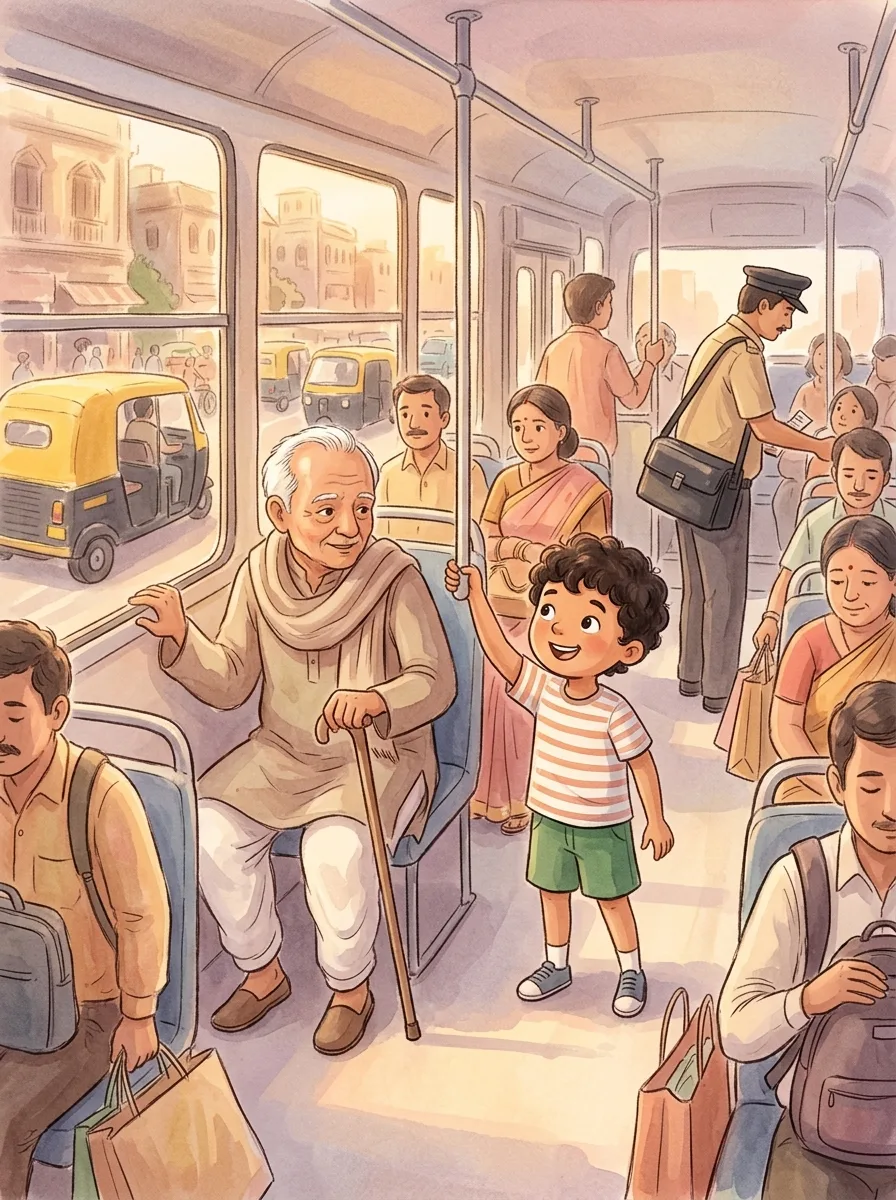
Your child and Nana's Seat on the Bus
Your child and Nana's Seat on the Bus
The city bus is packed and Your child has finally found a window seat. At the next stop an old man with a stick climbs on, wobbling as the bus lurches. Nobody moves. Your child thinks of Nana and stands up, holding the rail. The old man sits, catches his breath, and tells Your child a story about the city before there were buses at all.
Lesson: Respect is standing up when someone needs the seat more
Respect for Elders
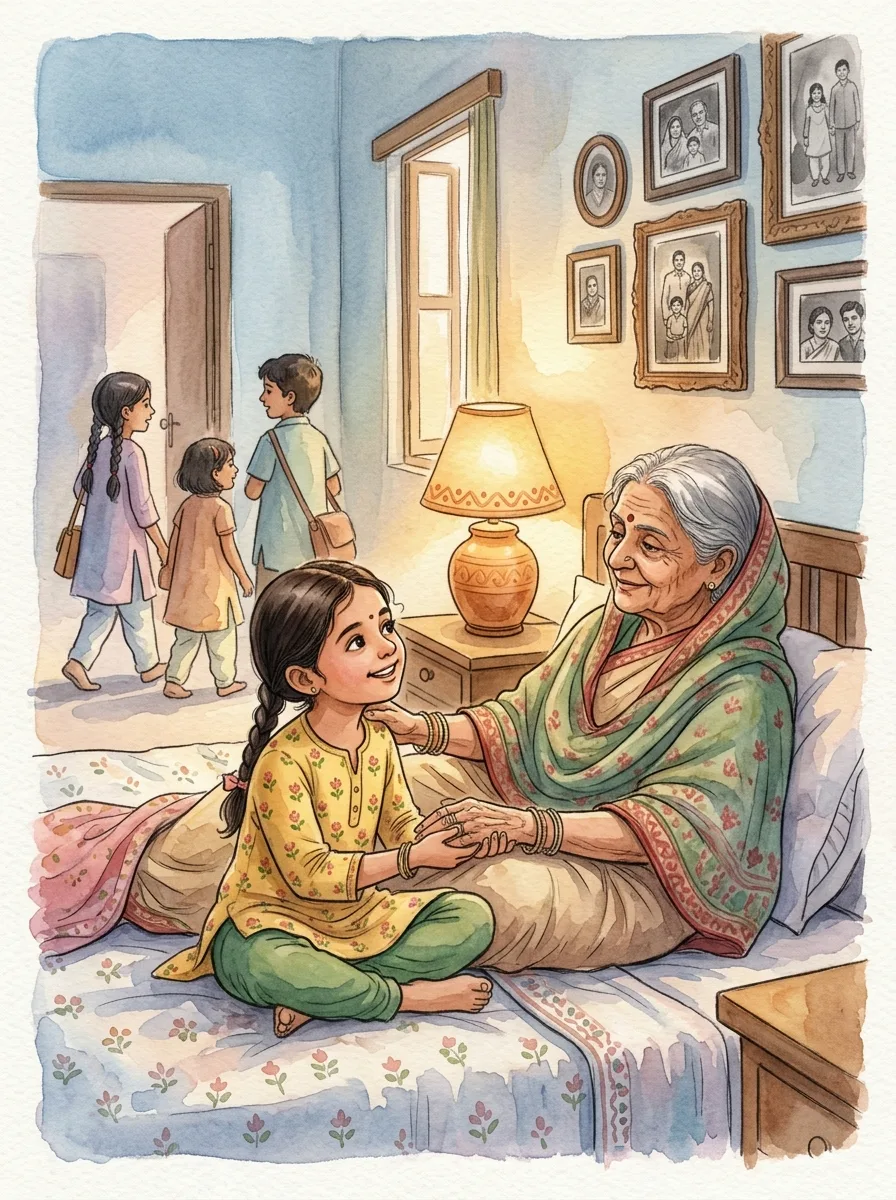
Your child and Dadi's Slow Story
Your child and Dadi's Slow Story
Dadi is telling the story of her wedding again, very slowly, and Your child has heard it five times. The cousins have already slipped away to their phones. Your child almost goes too, then sits back down, holds Dadi's hand and asks what colour the horse was. Dadi's eyes light up. It turns out the story had a horse in it all along.
Lesson: Listening to your elders is a gift you give them
Respect for Elders
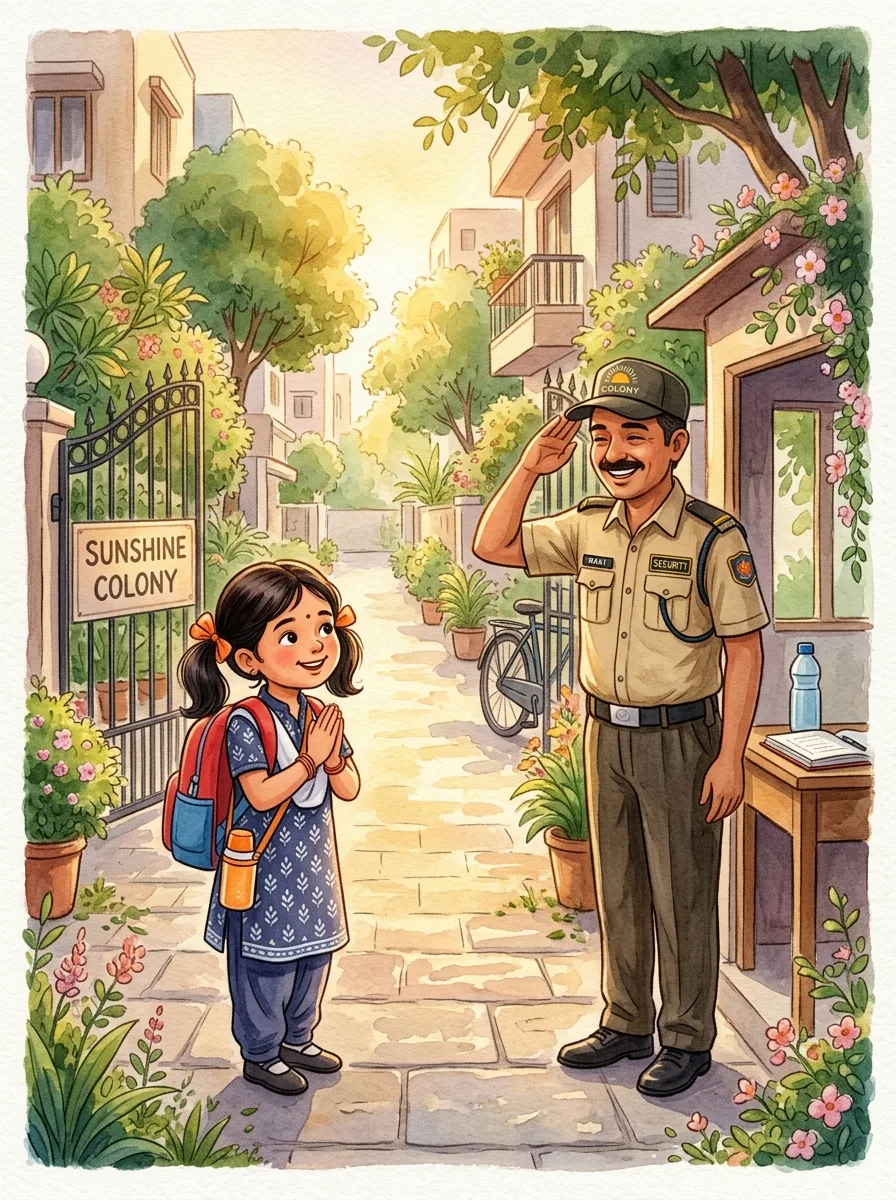
Your child and the Namaste at the Gate
Your child and the Namaste at the Gate
The colony guard, Ram Singh, has been at the gate for as long as Your child can remember, and nobody ever says good morning to him. One morning Your child stops, folds hands and says namaste, uncle. He straightens up like the sun just came out. Now every morning there is a namaste, a salute, and one question about the cricket score.
Lesson: Every elder deserves a greeting, not just the ones at home
Respect for Elders
Your child and the Old Man at the Bus Stop
Your child and the Old Man at the Bus Stop
An old man at the bus stop starts telling Your child about the days when the road was a river of bullock carts. The other children roll their eyes. Your child listens, asks where the carts went, and learns that the old man drove one. When the bus comes, Your child helps him up the step first. He says nobody has asked him a question in a very long time.
Lesson: Listening to an elder is a gift you both receive
Respect for Elders
Your child and the Loud Music
Your child and the Loud Music
It is Your child's birthday party and the music is loud. The old couple upstairs are unwell, and Mummy mentions it. Your child does not want to spoil the party. But Your child goes upstairs, apologises, and asks what time the music should stop. The old lady says nine, and thanks Your child for asking. At nine the music stops, and the next morning a plate of laddoos comes downstairs.
Lesson: Ask the elders before your fun becomes their trouble
Respect for Elders
Your child and Dadi's Same Question
Your child and Dadi's Same Question
Dadi asks the same question five times in an hour: has Your child eaten? The cousins mimic her. Your child laughs the first time, then sees Dadi's face. From then on, Your child answers every time as if it were the first, with a full sentence and a smile. Mummy notices and says Dadi's memory is fading, and that Your child's patience is the kindest thing in the house.
Lesson: Answer an elder's question kindly every time, even the fifth
Respect for Elders
Your child and the Seat in the Temple
Your child and the Seat in the Temple
The temple hall is full and an old woman with a stick stands at the back, swaying. Your child has a good seat near the front. Your child gets up, walks back, takes the old woman's arm and leads her to the seat, then stands at the back for the whole aarti. The old woman cannot see well, but afterwards she asks the priest to find the child who gave up the seat, and blesses Your child with both hands.
Lesson: Give your seat and you gain a blessing
Respect for Elders
Your child and the Old Teacher's Name
Your child and the Old Teacher's Name
The retired teacher who walks in the park is called 'the old man' by the children. Your child asks Papa, and learns he taught half the parents in the colony, including Papa. The next morning Your child says, 'Good morning, Master-ji,' by name. He stops, surprised. By the end of the week, all the children are saying it, and Master-ji starts teaching them cricket in the park.
Lesson: Learn an elder's name and their story follows
Respect for Elders
Your child and the Dinner That Waited
Your child and the Dinner That Waited
Nana comes home late and tired, and the family has already started eating. Your child is halfway through. Then Your child sees Nana sit down alone with a cold plate. Your child puts down the spoon, warms Nana's food, sits back down beside him, and eats the rest slowly so he is not alone. Nana says the food tastes better with company, and Mummy decides that from now on, everyone waits.
Lesson: Nobody old should eat alone at a full table
Respect for Elders
Your child and the Argument with Dadaji
Your child and the Argument with Dadaji
Dadaji says the old way of doing sums is better, and Your child knows the new way from school. They argue, and Your child says, 'You do not understand.' Dadaji goes quiet. That night Your child feels terrible, goes to his room, and asks him to show the old way. It is clever. The next morning, Your child shows the new way. Both of them learn something, and Dadaji says the argument was worth it.
Lesson: You can disagree with an elder without being rude
Respect for Elders
Your child and the Helper's Mother
Your child and the Helper's Mother
The house helper brings her old mother, who sits in the corner while she works. Your child has been taught to touch the feet of elders, but this old woman is not a guest. Your child thinks about it, walks over, touches her feet and says namaste. The old woman's eyes fill. She blesses Your child and tells the whole lane that in this house, every elder is an elder.
Lesson: Respect for elders does not depend on who they are
Respect for Elders
Your child and the Phone at the Table
Your child and the Phone at the Table
Nani is telling a story at dinner and every cousin is looking at a phone. Nani trails off. Your child notices, puts the phone face down, and asks, 'What happened next?' Nani brightens. One by one, the cousins look up. The story turns out to be about Nani running away from a buffalo as a girl, and by the end, all the phones are forgotten and the cousins are asking for another.
Lesson: Put the phone down when an elder speaks
Respect for Elders
Your child and the Walking Stick
Your child and the Walking Stick
Dadaji's walking stick has a cracked handle and he is embarrassed to use it. Your child takes it to the carpenter, who says a new handle would cost fifty rupees. Your child has fifty rupees for the fair. Your child pays, and the carpenter carves a small elephant on the top. Dadaji walks to the temple with his stick held high, and tells everyone about the elephant. The fair, Your child decides, is next year.
Lesson: Spend on an elder's pride before your own fun
Respect for Elders
Your child and Nana Who Could Not Hear
Your child and Nana Who Could Not Hear
Nana's hearing has faded, and the family has started talking around him instead of to him. He sits quietly at gatherings. Your child sits beside him at the next wedding and repeats the jokes into his good ear, slowly. Nana laughs at each one, a beat late, and the whole table starts waiting for his laugh. By the end of the night, everyone is speaking into Nana's good ear.
Lesson: Include the elder who has gone quiet
Respect for Elders
Your child and the Way to Say No
Your child and the Way to Say No
Bua wants Your child to eat a third laddoo, and a fourth, and Your child is full. Shouting 'no' at Bua would be rude, and eating would hurt. Your child thinks of Nani's rule: respect is honest and gentle. Your child holds Bua's hand, says the laddoos were wonderful, and asks to take two home for tomorrow. Bua beams, packs four, and says that is a child who has been raised well.
Lesson: You can refuse an elder politely and still honour them