
1
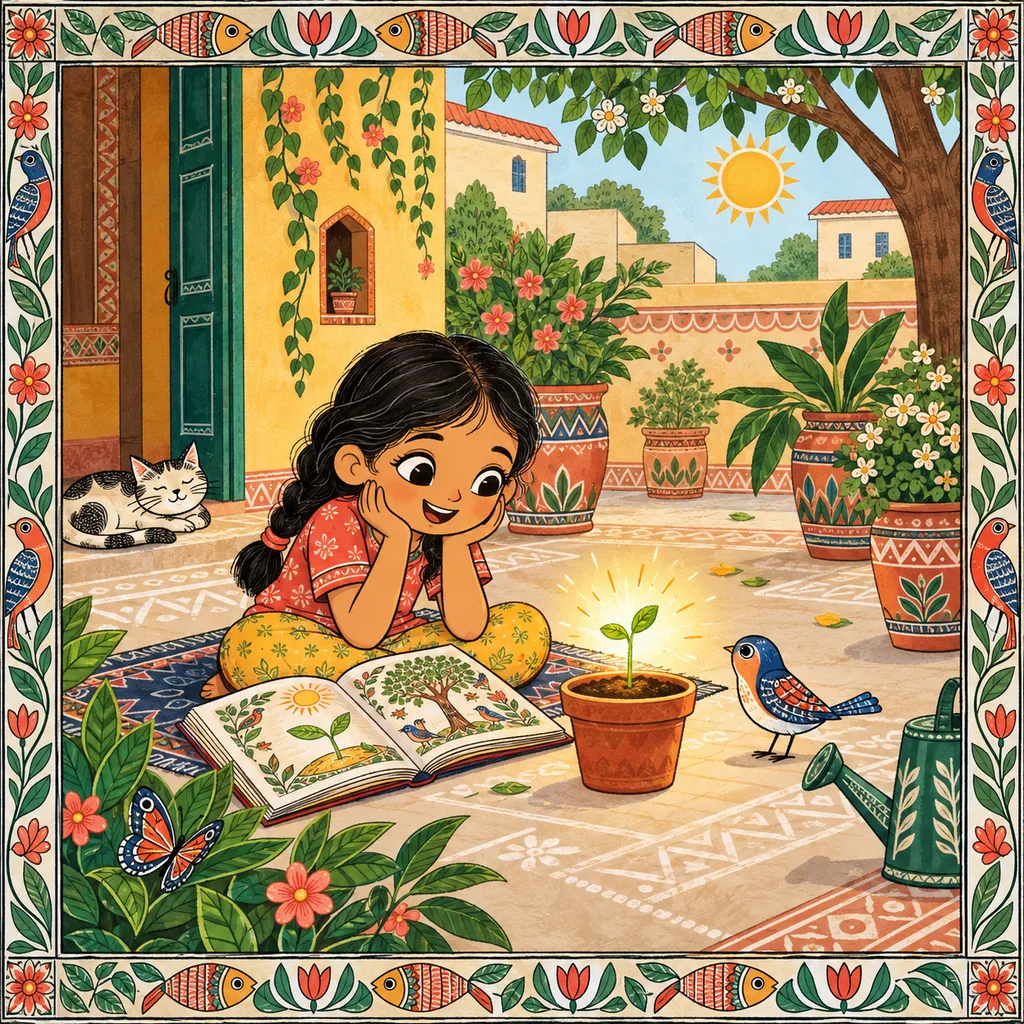
Madhubani-inspired
Dense borders, rhythmic lines, fish, birds, flowers, and flat areas of colour. Keep the scene joyful and readable for a young child.
Illustration direction
These are respectful visual starting points for a child's story, not promises that a generated image reproduces a traditional art form exactly. Choose a direction, review the finished pages, and keep the story's characters and action clear.
Dense borders, rhythmic lines, fish, birds, flowers, and flat areas of colour. Keep the scene joyful and readable for a young child.
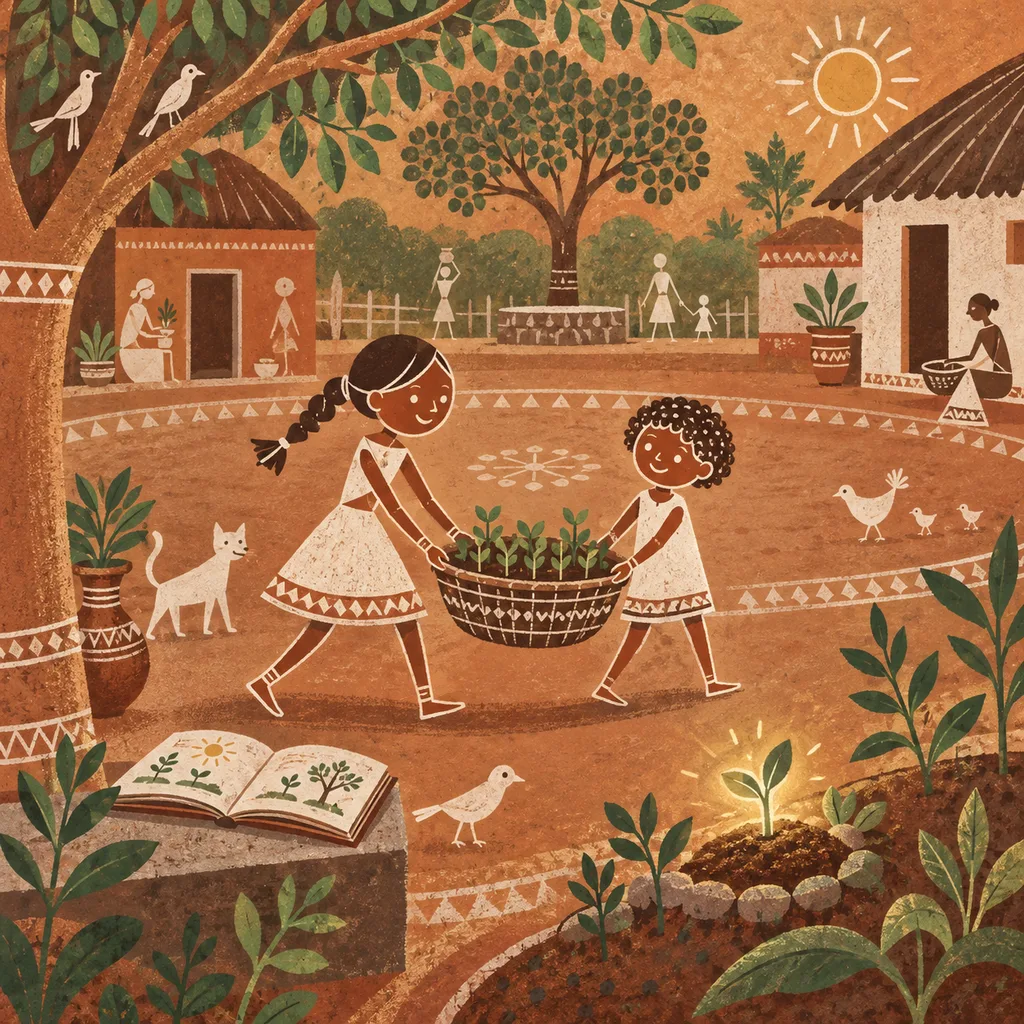
Simple human forms, earthy contrast, and circular community scenes. Use it for stories about cooperation, seasons, and village life without copying a living artist.
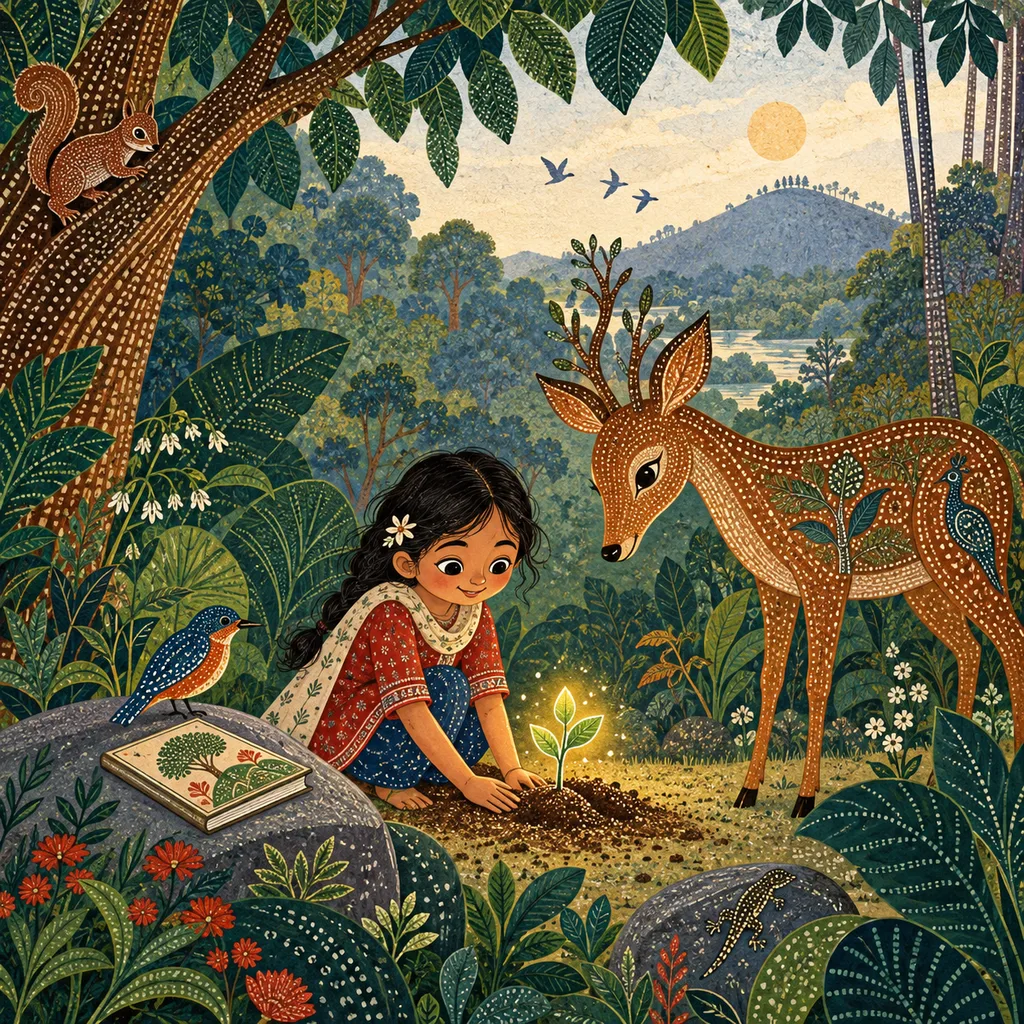
Patterned animals, dotted textures, and nature-filled silhouettes. Let one clear subject lead each page so texture never hides the action.
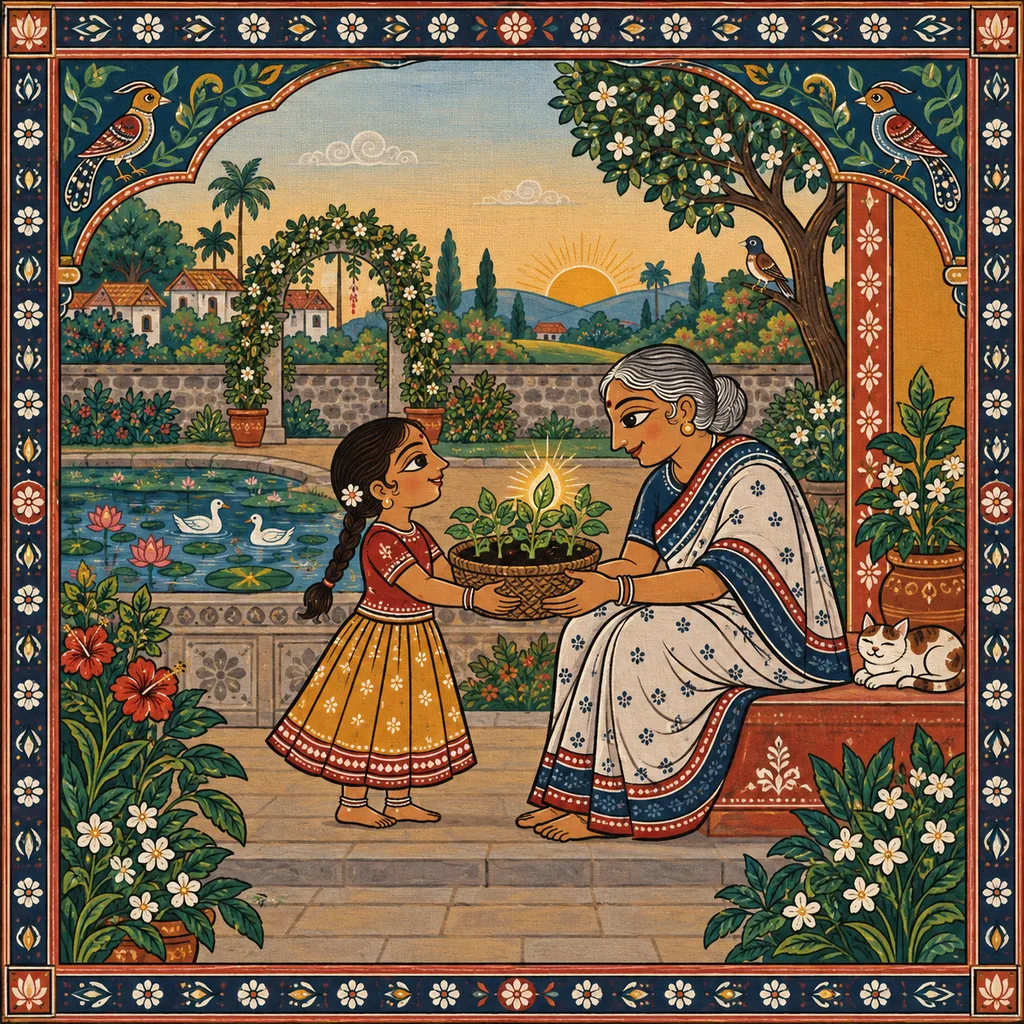
Strong outlines, decorative framing, and narrative scenes with a calm, hand-painted feel. Review facial expressions and cultural details before sharing.
Bold gestures, expressive faces, and a clean painted silhouette. Use the influence as a visual direction, not as a claim of historical reproduction.