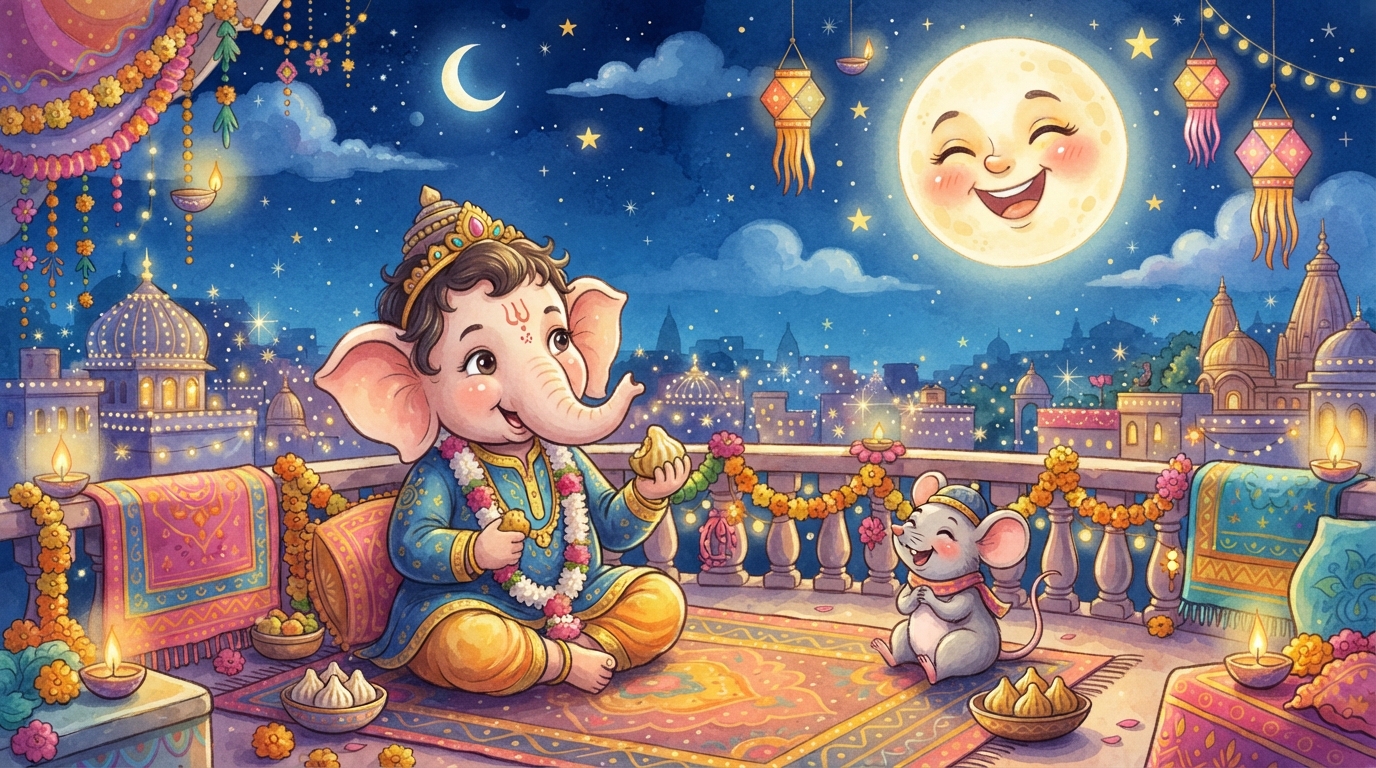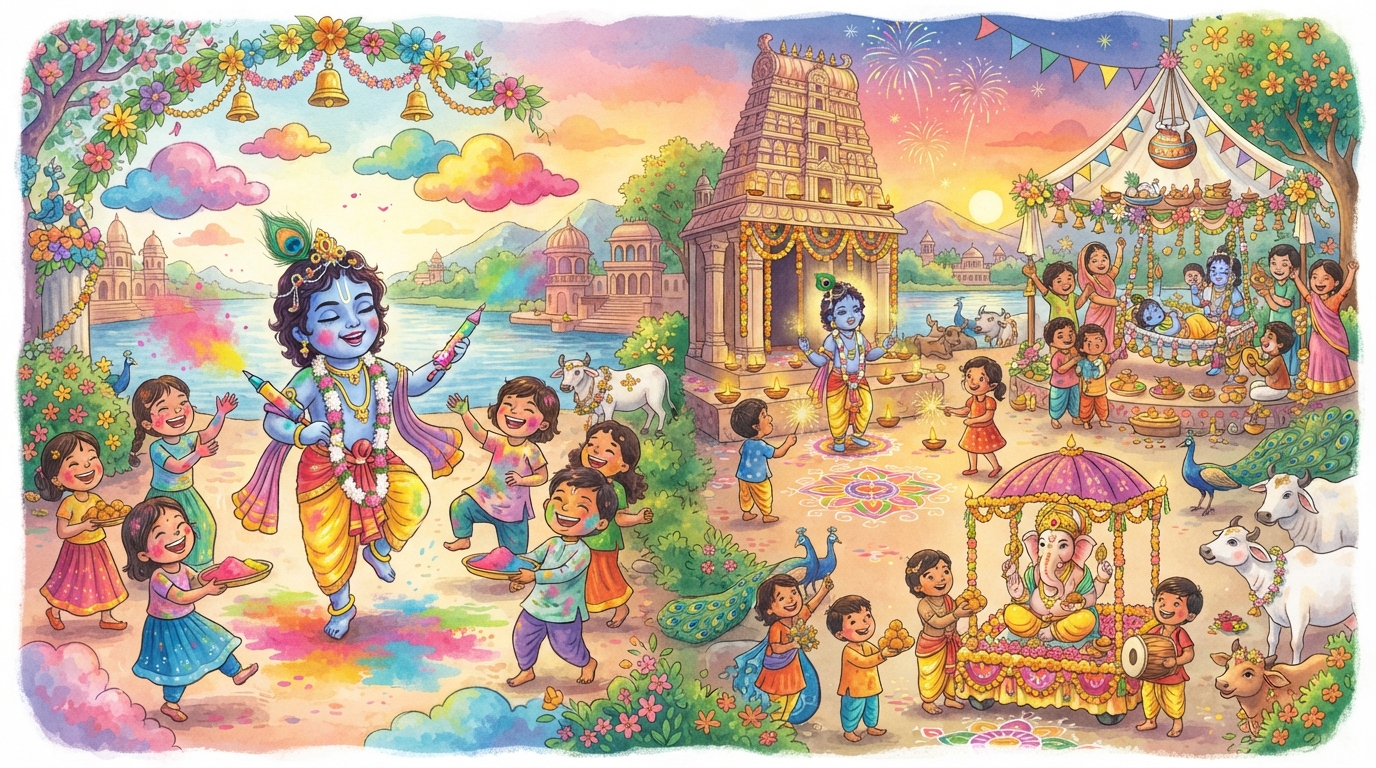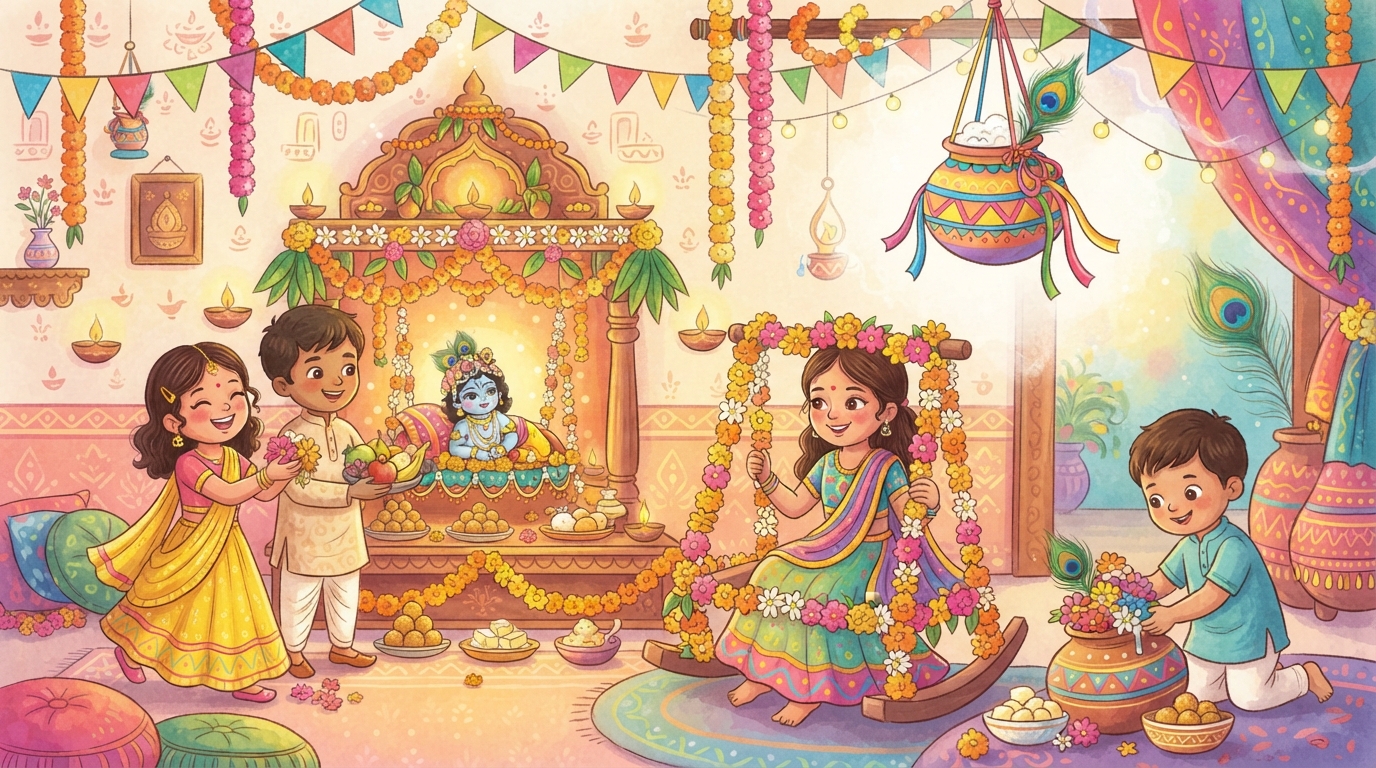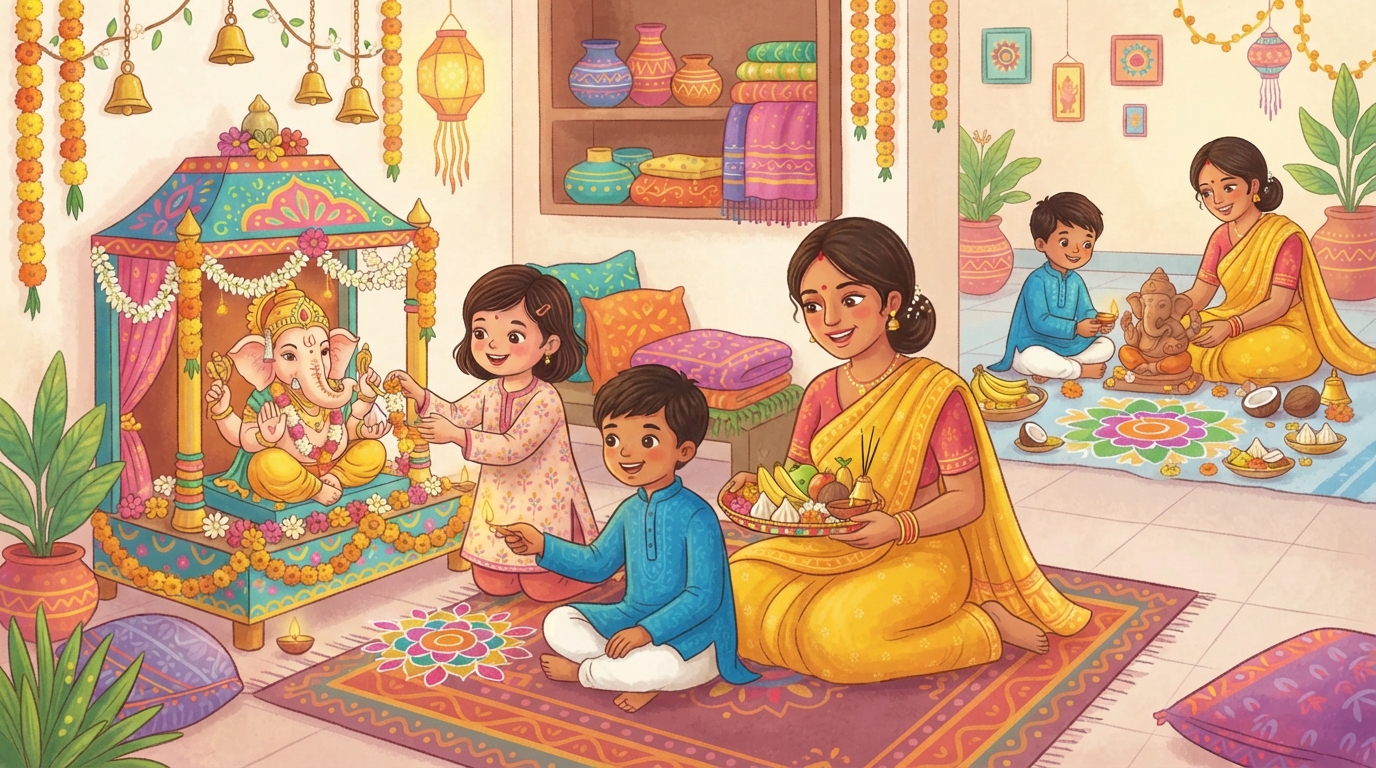
Ganesh Chaturthi is the festival when Ganpati Bappa comes home. For ten days a small clay Ganesha sits in the corner of the house, surrounded by marigolds, lamps and a plate of modaks that mysteriously keeps getting smaller. Children love it because there is a guest who never says no to sweets, a tiny mouse in every picture and drums in the street.
If your child has ever asked, "Why does Ganesha have an elephant's head?" or "Why do we put him in the water at the end?", these are the stories to tell. They are short, a little funny and full of things a young child understands: a mother who makes a friend out of clay, a father who does not recognise his own son, and a promise to come back next year.
The Story of Ganesha, Told Simply
Long ago, on a mountain called Kailash, lived the goddess Parvati. One day, while her husband Shiva was away, she wanted someone to guard her door. So she took some turmeric paste and clay, shaped a little boy with her own hands and breathed life into him. "You are my son," she said. "Let no one in until I say so."
The boy stood at the door like the bravest guard in the world. When Shiva returned, the boy did not know him and would not let him pass. Shiva did not know the boy either. There was a terrible fight, and in his anger Shiva struck off the boy's head.
Parvati's grief shook the mountain. To make things right, Shiva sent his helpers to bring back the head of the first creature they found. It was a gentle elephant. Shiva placed the elephant's head on the boy, brought him back to life and blessed him: "You will be called Ganesha. Whenever anyone begins something new, they will remember you first."
That is why Ganesha has an elephant head, why he is called the remover of obstacles, and why children write his name at the top of a new notebook.
Why a Mouse, Why Modaks, Why Ten Days?
Ganesha's ride is a tiny mouse called Mushak. A big god on a small mouse sounds silly, and it is meant to. It teaches children that even the smallest helper matters, and that size is not the same as strength.
Modaks are the sweet rice dumplings filled with coconut and jaggery that Ganesha loves best. Every family folds them on the first morning, and every child is allowed to make at least one lopsided one.
Bappa stays for one and a half, five, seven or ten days, depending on the family. On the last day the idol is carried to the water with drums and colour, and everyone shouts "Ganpati Bappa Morya, pudhchya varshi lavkar ya", which means "Come back soon next year." Saying goodbye is easier when you know your friend is coming back.
Three Easy Ways to Celebrate at Home
1. Make an eco-friendly clay Ganesha together. Use natural clay or flour dough. Let your child shape the round tummy, the trunk and one small tusk. It will be wobbly, and it will be perfect. At the end of the festival, dissolve it in a bucket of water and pour it on a plant.
2. Fold the first modak. Steam a soft rice dough, fill it with coconut and jaggery, and let your child pinch the pleats. Count them together. Ganesha is said to love twenty-one, but three is a fine start.
3. Hold a tiny evening aarti. Light one lamp, sing one song, and let your child ring the bell. Keep it short. The point is not perfection; it is that the child remembers doing it with you.
Make Your Child the Star of the Story
The best festival stories are the ones where your child is inside them. On Nanhe Kissey, you can create a personalised picture book where your child folds the first modak, finds Mushak in the festival crowd or holds the lantern at the visarjan procession. Pick one of the story ideas below, add your child's name and photo, and the illustrated book is ready in a few minutes.
Happy Ganesh Chaturthi from all of us. May your home be full of marigolds, modaks and one very small mouse.